You finish a great session. The student cracked quadratics, you were pleased, and you close the laptop. Three weeks later the parent messages: "We're going to pause for now, thanks for everything." No warning. You had no idea anything was wrong, because from the parent's chair, nothing was ever visibly right. They never saw the quadratics moment. They saw a bank transfer leaving every week and a child who says "fine" when asked how tutoring is going.
That gap is where most tutoring relationships quietly die. Not over bad teaching. Over silence. If you want the work behind getting more tutoring students to actually stick, parent communication is the muscle to train first, because it is the thing that keeps a booking alive long enough to produce the results, the referrals, and the reviews that grow everything else.
The parent is the client, even when the child is the student
Hold two truths at once. The child is who you teach, who you build rapport with, whose confidence you are trying to lift. The parent is who pays, who decides whether sessions continue, and who tells other parents at the school gate whether you were worth it.
You can be adored by the student and still lose the booking, because the person writing the cheque was never let into the room. A twelve year old is not going to report home that "we consolidated fractions and there's clear progress on multi-step problems." They shrug. They say it was fine. If that shrug is the parent's only data source, your excellent work is invisible, and invisible work gets cut when money is tight.
So treat the parent as a client with a legitimate need: visibility. Not because they are pushy, but because they are responsible for a child and spending real money on an outcome they cannot see happening. Your job is to make the progress visible to the person who cannot sit in the session.
Set expectations before the first lesson, not after the first problem
Most friction with parents comes from things that were never agreed, only assumed. The fix is a short conversation at the start that covers five things:
- The goal. Is this a specific GCSE grade by summer, catching up after a rough term, or building confidence and study habits? Name it out loud so you are both aiming at the same target.
- The schedule. Which day and time, how often, and how far ahead you book. Parents relax when the rhythm is fixed rather than negotiated weekly.
- Homework and practice. What you will set, roughly how long it takes, and what you need the parent to do (usually: protect the time, not mark the work).
- The cancellation policy. Your notice period and what happens to a late cancellation or no-show, in plain terms. Awkward to say once, miserable to improvise mid-dispute. If this is a weak spot for you, our guide on reducing student no-shows covers the wording.
- How you'll stay in touch. The channel, the frequency, and roughly when they will hear from you.
Ten minutes here prevents a term of low-grade misunderstanding. A parent who knows exactly what they signed up for is a parent who does not chase, does not second-guess, and does not quietly resent you.
In late summer that first conversation is worth even more, because the parent is already worried about the year ahead. Our guide on how tutors can help with back-to-school anxiety turns it into a session families can book and you can bill.
Build a rhythm of updates parents actually crave
Here is something schools taught parents to expect and then rarely deliver: visibility. A parent gets a report card twice a year and a ten-minute parents' evening slot they had to fight for. They are starved for a clear, honest picture of how their child is doing. As a private tutor, you can give them that, and it is one of the biggest reasons families stay.
Two layers work best.
The after-session note. Two or three sentences, sent the same day: what you covered, how it went, and one thing to practise before next time. It costs you two minutes and it completely changes the parent's experience. Now every payment has a visible result attached to it. Now "fine" from the child is backed by evidence from you.
The periodic progress summary. Every four to six weeks (or at the end of a half-term), step back from the individual sessions and show the arc. Where were we, where are we now, what is next. This is where a parent sees the line going up, which is exactly the moment they decide to keep going. A simple, consistent format makes this quick to produce; our progress report template for tutors gives you a structure you can reuse for every student, and our progress report examples cover what to actually write when the news is mixed, the homework is not happening or the grade has not moved yet.
The hardest version of this summary is the one you write when the report card grade has not moved at all. Our guide on the grade gap covers what to say then, and how to evidence the progress the grade is hiding.
You do not need to write an essay. You need to be reliable. A short update that always arrives beats a beautiful one that arrives when you remember.
Deliver difficult news early, calmly, and with a plan
Sooner or later you have to tell a parent something they do not want to hear. A missed target. Homework never done. The child was rude, or checked out, or is further behind than the parent believes.
The instinct is to soften it into vagueness or delay it entirely. Both backfire. Vague news ("we're getting there") lets the parent keep an unrealistic picture until reality arrives as a shock. Delayed news lands as a betrayal: "Why am I only hearing this now?"
The reliable structure is observation, impact, plan:
- Observation. What you actually saw, in neutral language. "In the last three sessions, homework wasn't attempted." Not "he's being lazy."
- Impact. Why it matters for the agreed goal. "That's the practice that moves the grade, so we're spending lesson time on things that should be homework."
- Plan. Two concrete steps, one yours and one theirs. "I'll set shorter, sharper tasks. Could you check it's done before our session? Let's see where we are in two weeks."
Parents can handle hard news. What they cannot handle is a surprise, or a problem handed to them with no route forward. Deliver it early and with a plan, and difficult conversations actually build trust rather than break it, because you have shown you will tell them the truth and steer the ship.
Hold boundaries so you stay consistent, not available 24/7
Warmth without boundaries burns you out and, oddly, makes you seem less professional. A tutor who replies instantly at 10pm one night and goes quiet for three days the next feels erratic. A tutor with clear, steady rules feels safe to rely on.
Set three things and hold them:
- Channel. Pick where parent communication happens and keep it there. When updates, notes, and scheduling live in one place tied to the student rather than scattered across texts, emails, and voice notes, nothing gets lost and you are never hunting for "that message about the exam date."
- Response window. Tell parents you reply within one working day, not immediately. This single sentence reclaims your evenings and sets a sane expectation from day one.
- Scope. Lesson questions are welcome. Last-minute schedule changes go through your cancellation policy. Emergencies are emergencies; a rescheduled birthday party is not.
None of this is cold. Boundaries are how you keep showing up well for every family instead of burning out on the loudest one.
Four scripts you can copy today
Every principle above turns into a two-minute message once you have wording to start from. Adapt the names and details, keep the shape.
The expectations message, sent before the first lesson:
Hi Sarah, ahead of Thursday, a few practicalities so everything runs smoothly. Maya's lesson is Thursdays at 5pm. I'll send a short note after each session and a fuller progress summary every half-term. I reply to messages within one working day. Reschedules are free with 24 hours' notice; inside 24 hours the lesson is charged, with one waiver per term because life happens. Looking forward to getting started.
The after-session note, sent the same day:
Hi Sarah, good session today. We worked on multi-step fraction problems and Maya solved the last four without any prompting. One thing to practise before Thursday: the odd-numbered questions on the sheet I've sent home. It should take about 20 minutes.
The progress summary, every four to six weeks:
Hi Sarah, a quick step-back on Maya's progress this half-term. When we started, she was losing marks on anything with more than one step. She now works through those reliably, and her last two practice papers came in at a solid grade 5. Next block we'll focus on geometry, currently her weakest topic. Happy to talk any of this through if useful.
The difficult news message, using observation, impact, plan:
Hi Sarah, I want to flag something early rather than let it drift. Homework hasn't been attempted before our last three sessions, which means we spend lesson time on practice that should happen between lessons, and that practice is what moves the grade. My plan: I'll set shorter, sharper tasks with a clear time estimate. Could you help by checking it's done the evening before our session? Let's see where we are in two weeks.
Let good records do the heavy lifting
Everything above sounds like a lot of writing. It is not, if your records are in order. The tutors who dread parent updates are almost always the ones reconstructing the last month from memory at 9pm on a Sunday.
Start with a dated note after each session: what you covered, how it went and what to practise. Those notes give you evidence for a short message today and a progress summary in six weeks. Our guide on keeping lesson notes for tutoring students covers a structure you can reuse.
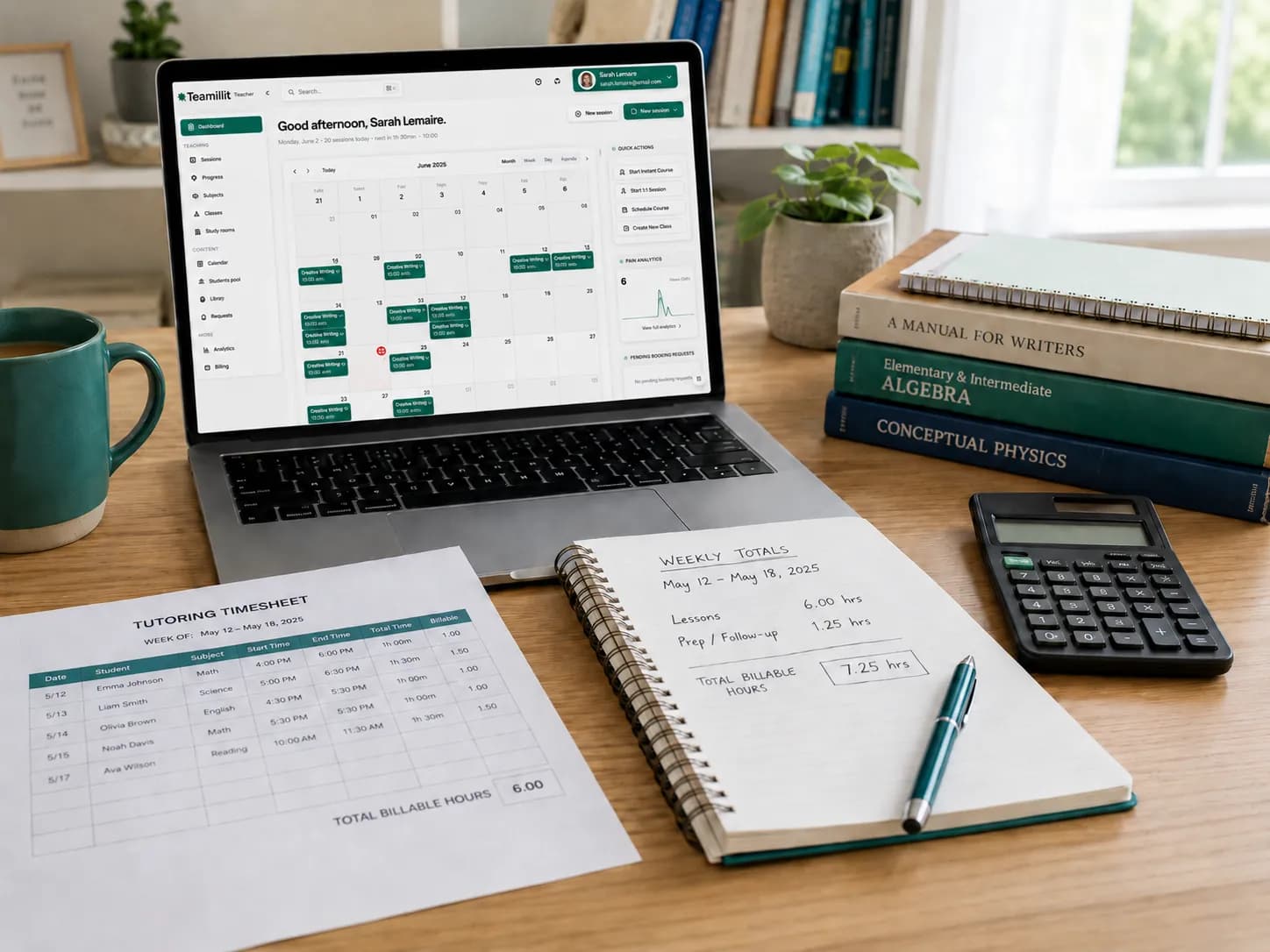
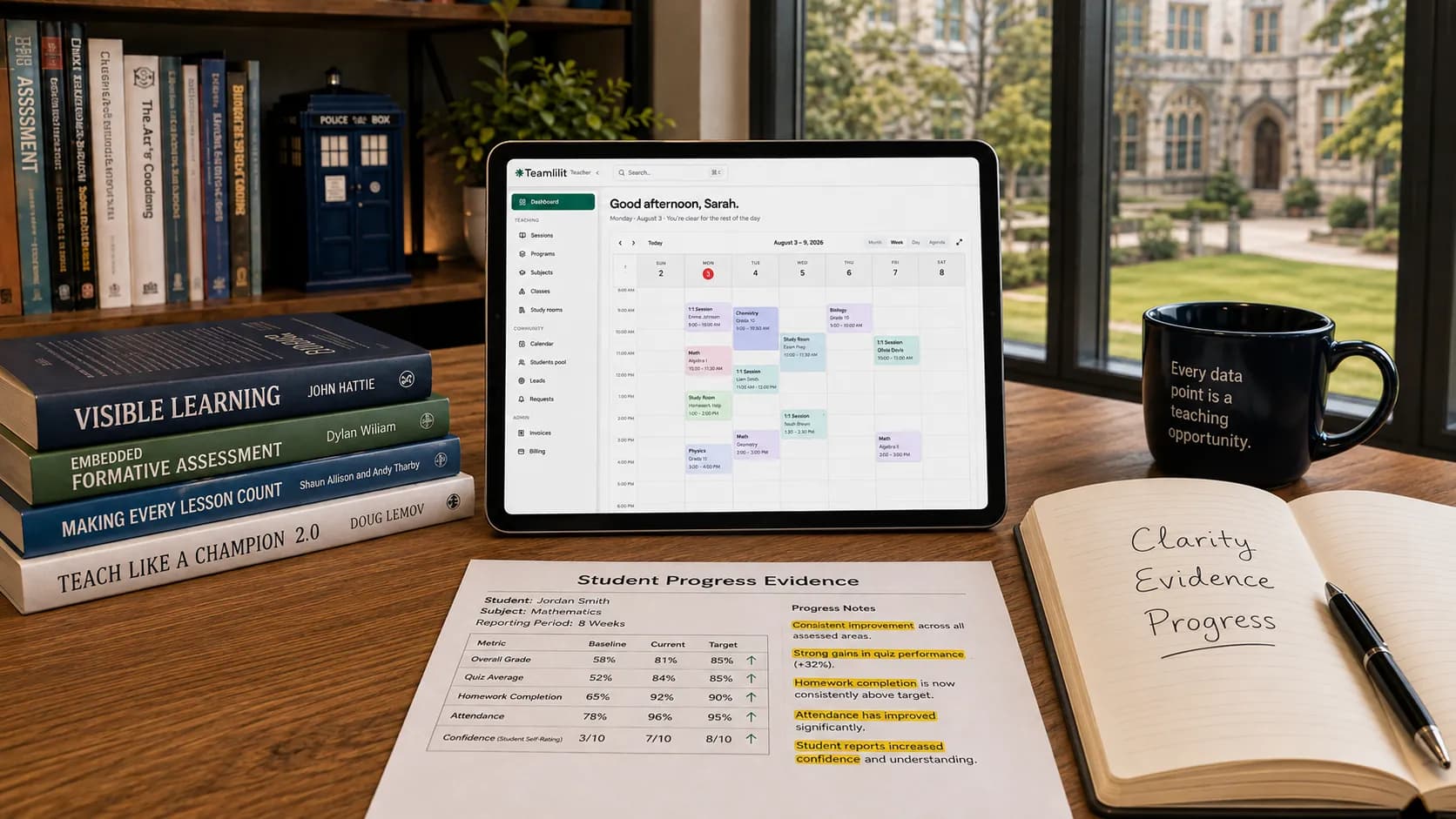
When writing an update still means checking a calendar, notebook and homework thread, keep the student's timetable, lesson notes, attendance and session history in one system. In Teamlilit, the note and homework you record stay attached to the student and lesson, so you can check what happened and what comes next before replying to the parent.
Good communication is not a talent some tutors have. It is a byproduct of good records plus a fixed rhythm. Get those two right and the messages write themselves.
Why this is the quiet engine of your whole business
Strong parent communication is not a nice-to-have. It is the mechanism behind the two things that grow a tutoring practice: keeping the students you have, and being recommended to new ones.
A parent who feels informed does not pause "to reassess." They renew without thinking, which is the heart of retaining tutoring students. And a parent who trusts you, who has seen the progress you made visible, is the parent who mentions your name at the school gate, which is exactly how referrals and reviews actually happen. You cannot ask a stranger for a review. You can earn one from a parent who has watched their child improve and felt looked after the whole way.
Every clear note, every early heads-up, every honest summary is a small deposit. Enough deposits and the relationship becomes the kind that survives a bad term, a busy month, or a competing offer. That is the return on ten minutes of communication a week.
FAQ
How often should I update parents as a private tutor?
A short note after every session plus a fuller progress summary every four to six weeks works for most tutors. The after-session note takes two minutes and shows what you covered and one thing to practise. The periodic summary steps back to show the arc toward the goal, whether that is a GCSE grade or building confidence. Agree the rhythm at the start so parents know when to expect you and stop chasing between updates.
The parent pays but the child is the student, so who do I really work for?
You serve both, but the parent is the client. The child is who you teach and build rapport with, while the parent decides whether the sessions continue, pays the invoices, and recommends you to other families. If you only manage the relationship with the child, you can do brilliant teaching and still lose the booking because the parent felt in the dark. Keep the parent informed even when the child is happy.
How do I tell a parent their child is behind or misbehaving?
Lead with facts, not judgement, and always pair the problem with a plan. Say what you observed, why it matters for the goal, and the two things you will each do about it. Avoid vague labels like lazy or difficult. Parents can handle hard news when it arrives early, calmly, and with a route forward. They react badly to surprises, so never let a missed target land for the first time on a report at the end of term.
What boundaries should I set for parent messages?
Set a channel, a response window, and a scope. Tell parents which method you use for updates, that you reply within one working day rather than instantly, and that lesson content questions are fine while last-minute schedule changes follow your cancellation policy. Boundaries are not cold. Parents trust a tutor who is consistent far more than one who answers at 10pm one night and vanishes the next.
How do good records make parent communication easier?
When every session has a dated note on what you covered, how it went, and what to practise, writing an update is a copy job rather than a memory test. You can quote real evidence, show a trend over weeks, and answer a parent question in seconds instead of guessing. Keeping lesson notes in one place per student turns communication from a chore you dread into a quick, credible byproduct of the teaching you already did.
What is the best way to communicate with parents as a tutor?
The best approach is to make a student's progress visible to the parent paying for it, through one consistent channel rather than scattered texts and voice notes. Send a short note the same day as each lesson so every payment has a result attached, then step back with a fuller summary each half-term to show the trend. Keeping every session note and each family's details in one place, as you can in Teamlilit, turns each update into a quick copy job instead of a memory test.
What should a parent communication template for tutors include?
A reliable update template covers the student's name and the lesson date, the topics you worked on, a short progress note, any challenge that came up, the homework set, and the date of the next session. Keep the tone factual and finish with one clear thing to practise so the parent knows how to help. Because Teamlilit stores a dated note for every session on the student's record, the topics, progress, and homework are already there to drop straight into the template.