Every tutor knows the feeling: you prepared the lesson, opened the room, and five minutes in you are still alone. The student forgot, or double-booked, or a parent decided that tonight was not a good night and told nobody.
The arithmetic is brutal: a tutor charging £30 who loses one booked lesson a week to no-shows gives up over £1,500 of teaching income a year, before counting the preparation time and the slot another student would have paid for. The fix is process, not luck: automatic reminders, upfront payment, and a written cancellation policy each remove one of the main causes, and tutors who combine them routinely cut no-shows to nearly zero.
Why students actually miss lessons
Most no-shows are not rudeness. They come from four predictable causes:
- Nobody was reminded. The lesson was agreed two weeks ago in a chat thread that nobody scrolled back to.
- There is no skin in the game. The lesson is paid after it happens, so missing it costs the family nothing.
- Rescheduling is harder than skipping. If moving the lesson means a message exchange, some families simply skip instead.
- There is no policy. Nothing was ever agreed about cancellations, so there is nothing to break.
Each cause has a direct fix.
Send two reminders, at the right times
Reminder timing matters more than reminder volume. The pattern that works for most tutors:
- 24 hours before: early enough that the student can still reschedule properly instead of vanishing.
- 1 hour before: late enough that the lesson is now part of their day, with the join link one tap away.
Send them by email or whichever channel the family actually reads, and always include the lesson time in the student's time zone and the link to join. If you run your lessons through a tutoring platform, these reminders should be going out automatically; doing this by hand every day is exactly the kind of unpaid admin worth eliminating.
Put a cancellation policy in writing
A policy only works if it exists before it is needed. Two or three sentences are enough:
Lessons can be rescheduled free of charge up to 24 hours in advance. Cancellations within 24 hours, or missed lessons, are charged in full. Each term, one late cancellation is waived, because life happens.
The free pass is doing real work in that paragraph: it makes the policy feel fair, which makes families accept it, which makes the rest of it enforceable. Put the policy in your welcome message, on your booking page, and on your invoices.
If you would rather not word it from scratch, our free private tutor cancellation policy generator does exactly this: choose your notice period, your late and no-show fees, and how you handle illness, and it writes a fair, parent-friendly policy you can download as a PDF or Word file. It also produces a ready-to-send message and email, so introducing the policy to a new family is a copy and paste rather than an awkward conversation.
Get payment before the lesson, not after
The single strongest no-show fix is prepayment. When the lesson is already paid for, attendance becomes the family's way of getting their money's worth rather than your problem to chase.
The gentlest version is the package: families buy 4, 8 or 12 lessons upfront, often with a small discount, and missed lessons are deducted according to your policy. Packages also stabilise your income, which we cover in detail in our guide on how to price your online tutoring sessions.
Make rescheduling easier than skipping
If a family can move Thursday's lesson to Saturday in two clicks, they will move it. If they have to negotiate by message, a meaningful share will just not show up. A self-service scheduling and rescheduling setup where families can see your availability and reschedule within your rules removes the friction that turns conflicts into no-shows.
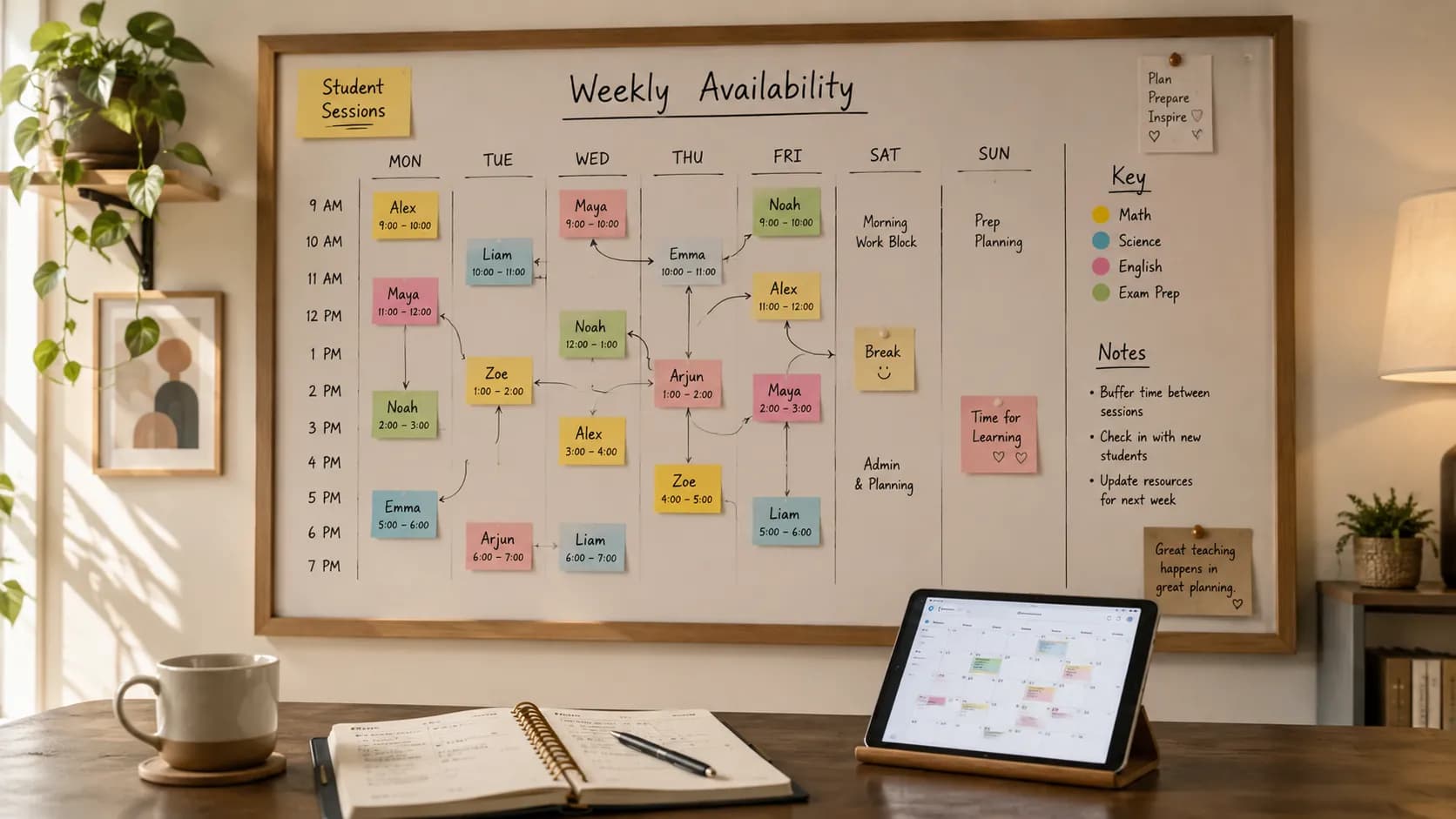
The same applies to your own calendar: recurring weekly slots are dramatically more reliable than lessons agreed one at a time. A student who knows that Tuesday 5pm is their slot builds their week around it. Our guide on building a tutoring timetable covers how to structure this.
Track attendance, and look at it monthly
You cannot manage what you do not record. Keep attendance per student, even if it is just a column in your notes, and review it monthly. Patterns appear quickly: one student misses every lesson that follows a school holiday, another reschedules every second Friday.
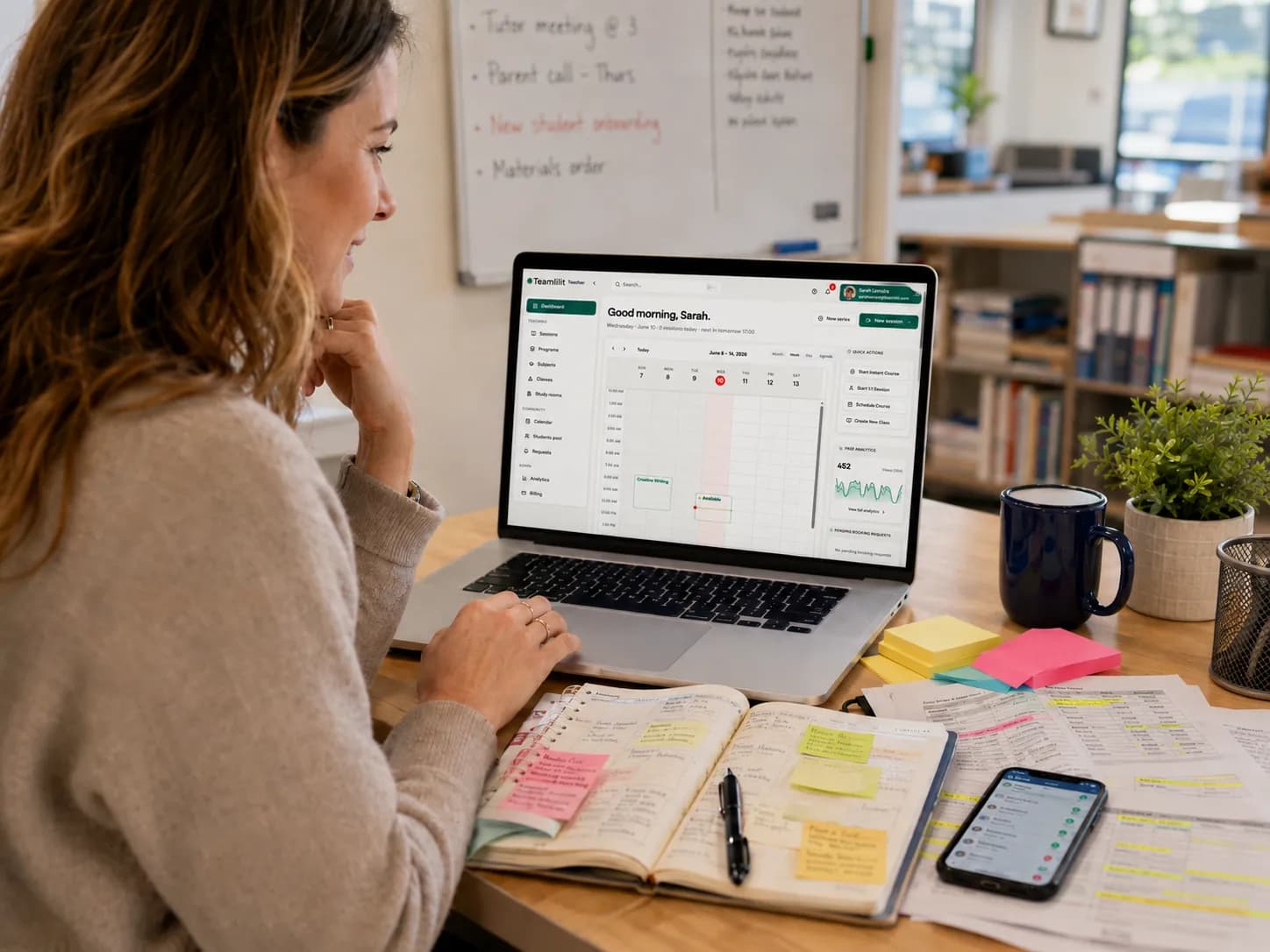
Once you see a pattern, address it directly and kindly: a different weekly slot, a conversation with the parent, or a switch to prepaid packages for that student. Tutors using an all-in-one platform like Teamlilit get this attendance history recorded automatically with each lesson, which makes the monthly review a two-minute glance rather than an archaeology project. If you would rather not keep that column by hand, Teamlilit's automatic attendance tracking records join and leave times per student on every session, so the pattern is already there when you look. No-shows also become easier to manage when you connect attendance with invoices and cancellation rules, so every charged absence has a clear lesson record behind it.
How no-shows affect tutor billing
A missed lesson is not just an empty slot: it has a billing consequence too. Whether the absence is chargeable depends on your agreed cancellation policy and the circumstances of the missed lesson.
If you are checking absence notes against an invoice spreadsheet each month, Teamlilit's attendance-based tutor billing generates draft invoices from tracked lessons and keeps payment status on the same record. You decide whether to add a no-show charge or waive it, and review the invoice before sending. Our guide on how to invoice tutoring students based on attendance walks through the method step by step.
For group lessons: overbook slightly, and keep a waitlist
Group sessions soften the cost of any single absence, but empty seats still cost money. Two mechanisms help: keep a short waitlist for popular group slots so a cancelled seat can be refilled, and price groups so that your session is profitable even at typical attendance rather than perfect attendance. Our group tutoring pricing examples show how per-seat pricing absorbs this.
Frequently asked questions
How can private tutors reduce lesson no-shows?
Send clear booking confirmations and automatic reminders 24 hours and 1 hour before each lesson, sync lessons to students' Google Calendars, and enforce a written 24-hour cancellation policy. Tracking attendance in Teamlilit then lets you invoice only for attended or late-cancelled lessons, so parents see fair, transparent charges.
Should tutors charge for no-shows?
Yes, once a clear policy is in place. A common approach is to charge the full lesson fee for cancellations made less than 24 hours in advance, with one free pass per term for genuine emergencies. Tutors who never charge for no-shows tend to get more of them.
How many lesson reminders should I send?
Two reminders work well for most tutors: one 24 hours before the lesson, when there is still time to reschedule, and one 1 hour before, when the lesson is imminent. More than two starts to feel like spam and gets ignored.
What is a fair cancellation window for tutoring?
24 hours is the most common and most accepted window. It gives you a realistic chance to offer the slot to another student, and families find it reasonable. Shorter windows protect students more; longer windows protect your income more.
The short version
No-shows are a process problem, not a people problem. Two well-timed reminders, a written policy with one free pass, payment before the lesson, self-service rescheduling, recurring slots and a monthly look at attendance will eliminate most of them. Put the mechanisms in place once, and the empty video room becomes a rare event instead of a weekly tax on your business.