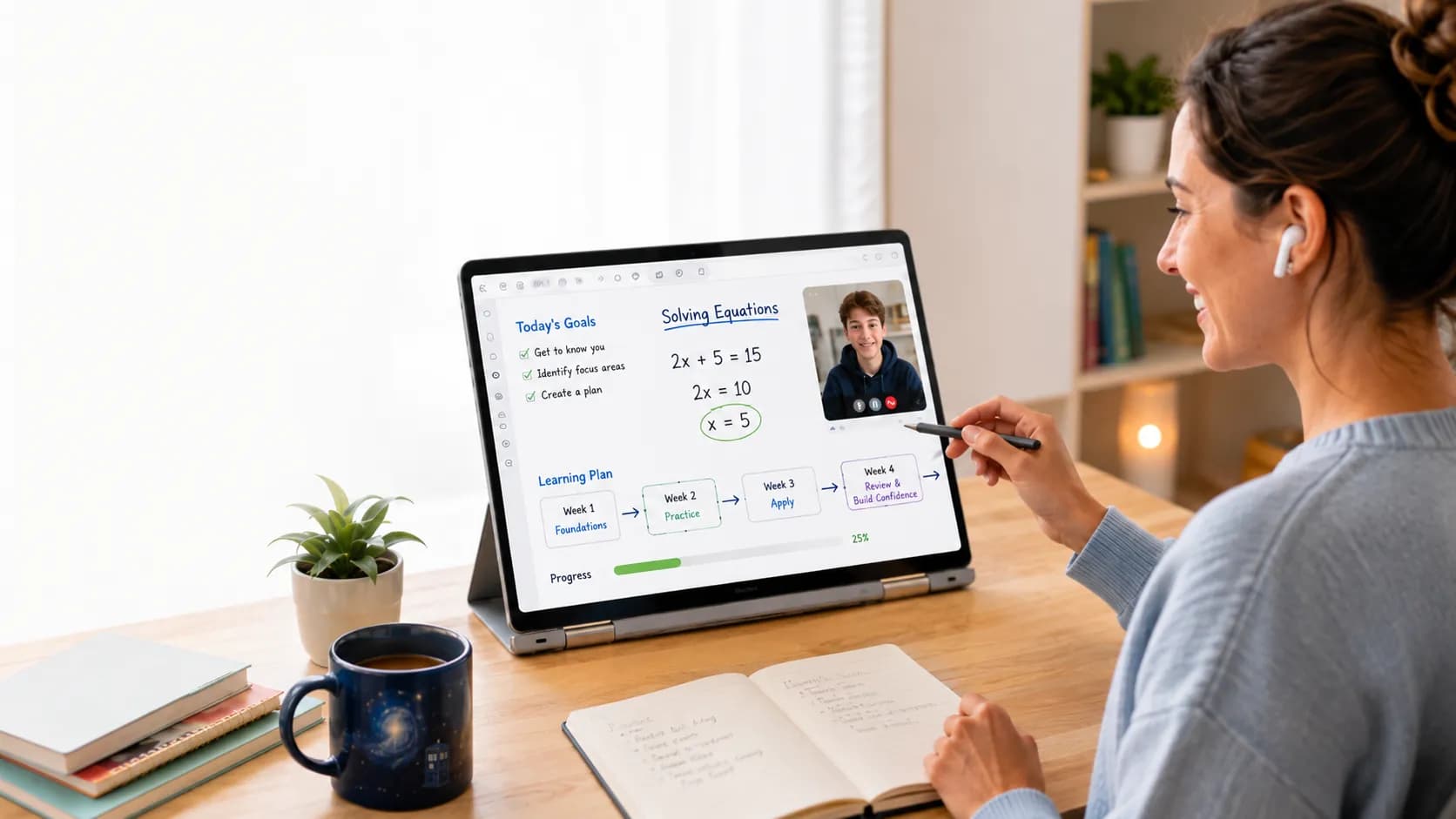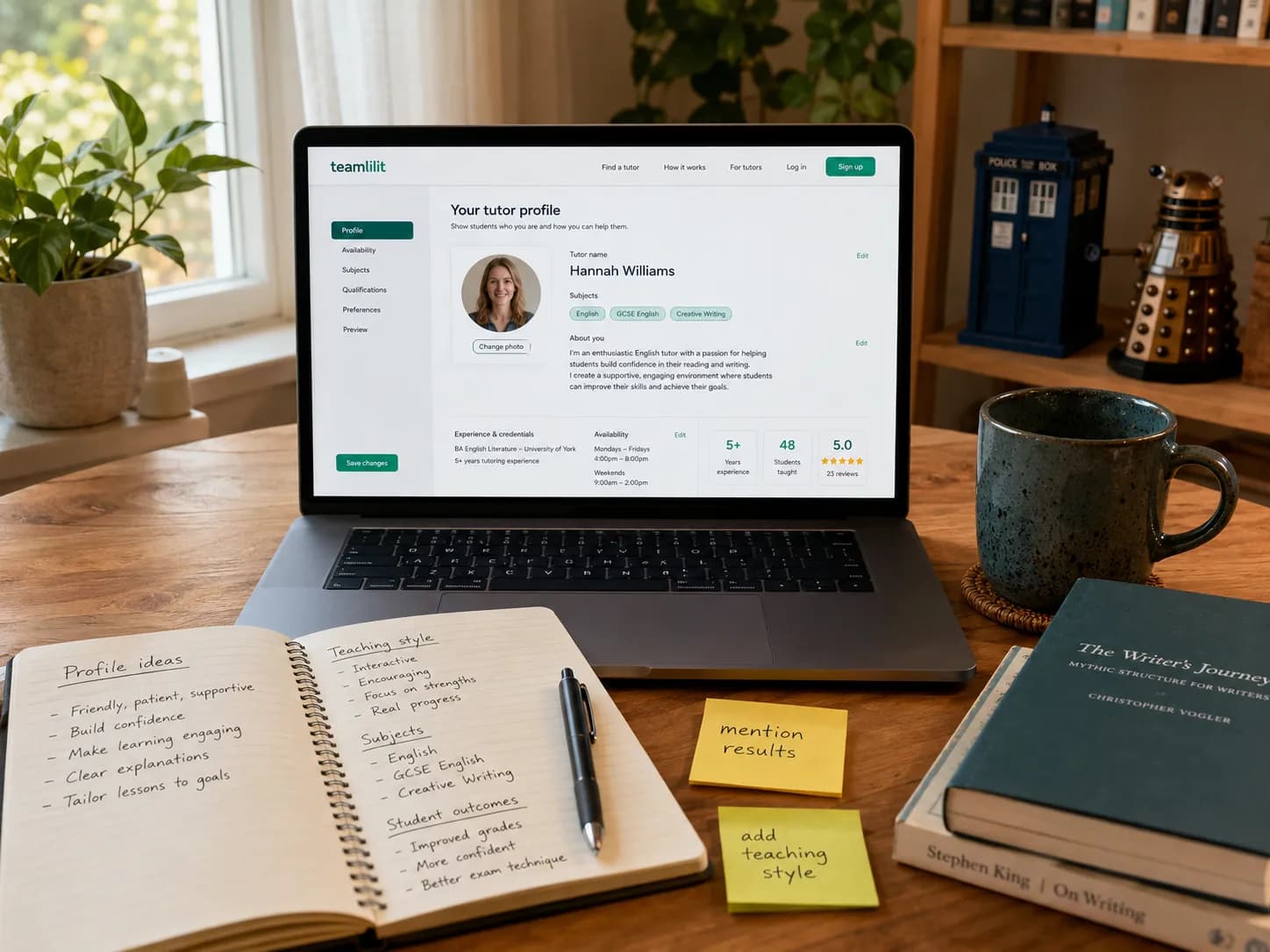
A parent lands on your profile at nine in the evening. Their child is struggling with GCSE maths, the mock is in six weeks, and they have three tabs open with three tutors who all look roughly the same. They will give each one about twenty seconds. Then they will book one, message one, or close all three and put it off for another week.
Your profile is not a CV. It is the twenty seconds where a worried parent decides whether you are the person who can help their child. Most tutor profiles fail that test, not because the tutor is not good, but because the profile is written about the tutor when it needs to be written for the parent. Here is how to fix that, line by line, so more of those late-night readers turn into booked lessons. It is one of the highest-leverage moves in the whole business of getting more tutoring students.
What the parent is actually deciding
Before you write a word, understand the two questions running through a parent's head. Everything on your profile is either answering one of them or wasting space.
Can this person help MY child? Not children in general, theirs. A parent with a GCSE resit student does not care that you also teach A-level physics and primary phonics. They are scanning for evidence that you have handled a situation like theirs and got a good outcome.
Can I trust them? You are asking for regular, often unsupervised time with someone's child, plus money up front. Trust is not a nice-to-have here, it is the whole transaction. A brilliant teacher with no visible trust signals loses to a solid one who looks safe and credible.
If you keep those two questions in front of you, the profile more or less writes itself. Every line should earn its place by moving one of them closer to a yes.
The structure of a profile that converts
A strong profile follows a predictable shape, because parents are skimming and a familiar order lets them find what they need fast.
- A headline that says who you help. Not your name or "Private Tutor", but the promise: "GCSE and A-level maths tutor helping anxious students rebuild confidence and grades."
- Who you work with and what you specialise in. The subjects, levels, and exam boards you actually teach, and the kind of learner you are best with.
- Results and specialisms. Concrete evidence that you get outcomes, not claims that you care about them.
- Qualifications and trust signals. Your relevant background, plus an enhanced DBS check and safeguarding awareness stated plainly.
- A human touch. A line or two that makes you a real, likeable person rather than a list of credentials.
- A clear call to book. One obvious next step, made effortless.
You do not need hundreds of words. Around 150 to 300 is plenty. The goal is to be read to the end, not to say everything.
Write for the parent, not for yourself
The single most common mistake is treating the profile as a place to describe yourself. "I am a passionate and dedicated tutor with a love of learning" tells the parent nothing about their child and reads identically to every other profile they have open.
Flip every sentence outward. Instead of listing what you have, describe what the student gets. A parent does not book "ten years of experience", they book "students who arrive dreading maths and leave able to sit the exam without panicking". Same fact, aimed at their worry instead of your ego.
A quick test: read each line and ask, "so what, for my child?" If the line does not survive that question, cut it or rewrite it until it does.
Specificity beats adjectives every time
"Passionate", "dedicated", "experienced", "engaging". These words feel like they are doing work, but they are invisible, because every tutor uses them and none of them can be checked. Specifics are the opposite: they are memorable, credible, and impossible to fake.
Here is the difference in one line.
Weak: "I am an experienced and passionate maths tutor who helps students reach their full potential."
Strong: "Over the last four years I have helped 30-plus students through AQA and Edexcel GCSE maths, with most moving up at least two grades. I am at my best with students who have decided they are just bad at maths, and my job is to prove them wrong."
The second version is longer, but a parent finishes it knowing exactly who you help, which exam boards you know, what results to expect, and what makes you different. That is what specificity buys you. Wherever you are tempted to reach for an adjective, replace it with a number, an exam board, a subject, or a real example instead.
Trust signals are not optional
This is where nervous, understated tutors leave bookings on the table. You may feel awkward stating your credentials, but to a parent, these lines are the reassurance that lets them relax enough to book.
Say plainly: your relevant qualifications and teaching background, that you hold an enhanced DBS check, and that you take safeguarding seriously. If you tutor online, a line about how sessions work and that a parent is welcome to sit in early on does a lot of quiet reassuring. None of this is bragging. It is answering the "can I trust them" question before the parent has to ask it, which is exactly when trust is easiest to give.
If you want a fuller picture of what belongs on file behind the scenes, our guide on keeping good lesson notes and records pairs naturally with a trustworthy public profile. And if you are still at university yourself, our guide to finding tutoring jobs as a university student in the UK covers where that profile should appear first.
Add a human touch, then get out of the way
Once the parent believes you can help and can be trusted, one more thing seals it: liking you. People book people. A single warm, specific line does more than a paragraph of personality claims. Something like "I teach from my spare room in Leeds with a very unhelpful cat, and I still get a genuine kick out of the moment a topic finally clicks" makes you a real, memorable human rather than a service.
Keep it to a sentence or two. The human touch is seasoning, not the meal. Its only job is to make you feel like someone a parent would happily have in their child's week.
End with an easy way to book
A profile that impresses but ends with "feel free to get in touch" quietly loses most of the readers it just won. "Get in touch" is a task: the parent has to compose a message, wait for a reply, and keep the momentum going across days. By the second day, the mock feels less urgent and the tab is closed.
The fix is to make the next step a single, obvious action that takes seconds. End with a clear instruction ("Book a free 15-minute introductory call below") and give them somewhere to actually do it. This is exactly what a tutor booking page is for: the parent reads your profile, sees your real availability, and picks a time on the spot, no message thread, no waiting, no cooling off. The reading and the booking happen in the same breath, which is the whole point.
That "book instantly" step is worth more than any clever wording higher up the page. You can write the perfect profile, but if the parent then has to chase you, you have reintroduced the friction that loses students. Removing it is also one of the most reliable ways to cut no-shows and dropped enquiries, because a booked slot with a confirmed time behaves very differently from a half-finished message.
Put it all together
A profile that gets you booked is not a list of your qualities. It is a short, specific, parent-facing answer to two questions ("can you help my child" and "can I trust you"), finished with an effortless way to say yes. Lead with who you help, prove it with specifics rather than adjectives, state your trust signals without apology, show a flash of the human behind the credentials, and end with one clear next step the parent can take before their coffee goes cold.
Write it once, properly, and it works for you every night while you sleep, quietly turning twenty-second skims into booked lessons.
FAQ
What should a private tutor profile include?
A strong profile includes a clear headline saying who you help and with what, a short section on the students and subjects you specialise in, concrete results or examples, your qualifications alongside trust signals like an enhanced DBS check, a brief human touch so you feel real, and an obvious way to book. Every part should answer one parent question: can this person help my child, and can I trust them?
How long should a tutor profile be?
Long enough to build trust and short enough to be read, usually around 150 to 300 words. Parents skim, so lead with the most important point, use short paragraphs, and cut anything that is about you rather than about their child. If a line does not help a parent decide, remove it.
How do I make my tutor profile stand out?
Be specific where other tutors are vague. Swap adjectives like passionate and dedicated for concrete detail: the exact exam boards you teach, the results your students have achieved, and the type of learner you are best with. Specificity is what makes a profile feel credible and different, because generic praise reads the same on every page.
Should I include my qualifications and DBS on my tutor profile?
Yes. Parents are handing you time with their child, so trust signals matter as much as teaching skill. State your relevant qualifications and experience, and mention an enhanced DBS check and any safeguarding awareness plainly. These reassure a hesitant parent and often make the difference between a reader and a booking.
How do I end my tutor profile with a call to action?
End by telling the parent exactly what to do next and making it effortless to do it. A clear line such as book a free introductory call, paired with a booking page where they can pick a time in seconds, converts far better than inviting them to get in touch. Interest fades fast, so the easier the next step, the more bookings you get.