A parent messages on Tuesday. You reply within the hour, agree a time, prepare properly, and run a genuinely good first lesson. Then nothing. No answer to your follow-up, no second booking, just an hour of your week you held open for someone who is now trying another tutor.
Many otherwise successful trial lessons are lost in the final three minutes, not the first forty. The tutor teaches well, ends with "let me know if you would like to carry on", and hands the decision to a parent who is comparing four people and will decide by whoever makes it easiest.
A trial lesson that converts is a different shape. It is a diagnostic that finds a real gap, a single visible win that proves you can close it, and a specific plan with a specific slot attached. Here is that hour, minute by minute, and the script that ends it.
Should your trial lesson be free or paid?
There is no universally right answer, but the three models attract very different people, so pick deliberately rather than by default.
| Model | What it is | Best for | Watch out for |
|---|---|---|---|
| Short free consultation | Ten to fifteen minutes, no teaching, goals and fit only | Building a roster from cold enquiries, parents who need reassurance before spending | Letting it drift into a free lesson, which trains people to expect free work |
| Paid diagnostic at a reduced rate | Half your usual rate for a thirty to forty-five minute assessment, credited against the first block | Established tutors with more enquiries than free evenings | Sounding like a discount, which invites price comparison |
| Full-rate first lesson | Your normal rate, your normal lesson, no special framing | Referrals and anyone who arrived already convinced | Fewer people say yes, so it needs steady inbound enquiries behind it |
Two rules hold across all three. Say the price before the session rather than after, because a surprise invoice undoes an hour of goodwill. And if you charge for the trial, credit it against the first block of lessons, so the money reads as a deposit on a plan rather than a fee for a sales call. If you are still setting your numbers, our guide on how to price online tutoring sessions covers the rate itself.
The paid diagnostic is the strongest default for an established tutor, for one unglamorous reason: it filters. People who pay something, however small, turn up prepared, and the ones who were only ever collecting free lessons drop out before you have blocked an evening for them.
Ask five questions before the trial lesson starts
Whether a trial converts is largely decided before it begins. Tutorful's guide to the first session puts "ask the right questions before the lesson" first for exactly this reason: an hour spent discovering things you could have read in advance is an hour you did not spend teaching.
Send a short form when the trial is booked. A Google Form is perfectly adequate, and five questions is enough.
| What to ask | Why it earns its place |
|---|---|
| Year group, exam board and subject | Decides your material before you open the session, not during it |
| The last two topics they struggled with | Gives you a diagnostic starting point instead of a blank page |
| What "better" looks like by when | A grade, a test date or a target score turns lessons into a countdown with a purpose |
| What has already been tried | Stops you re-selling an approach that has already failed them |
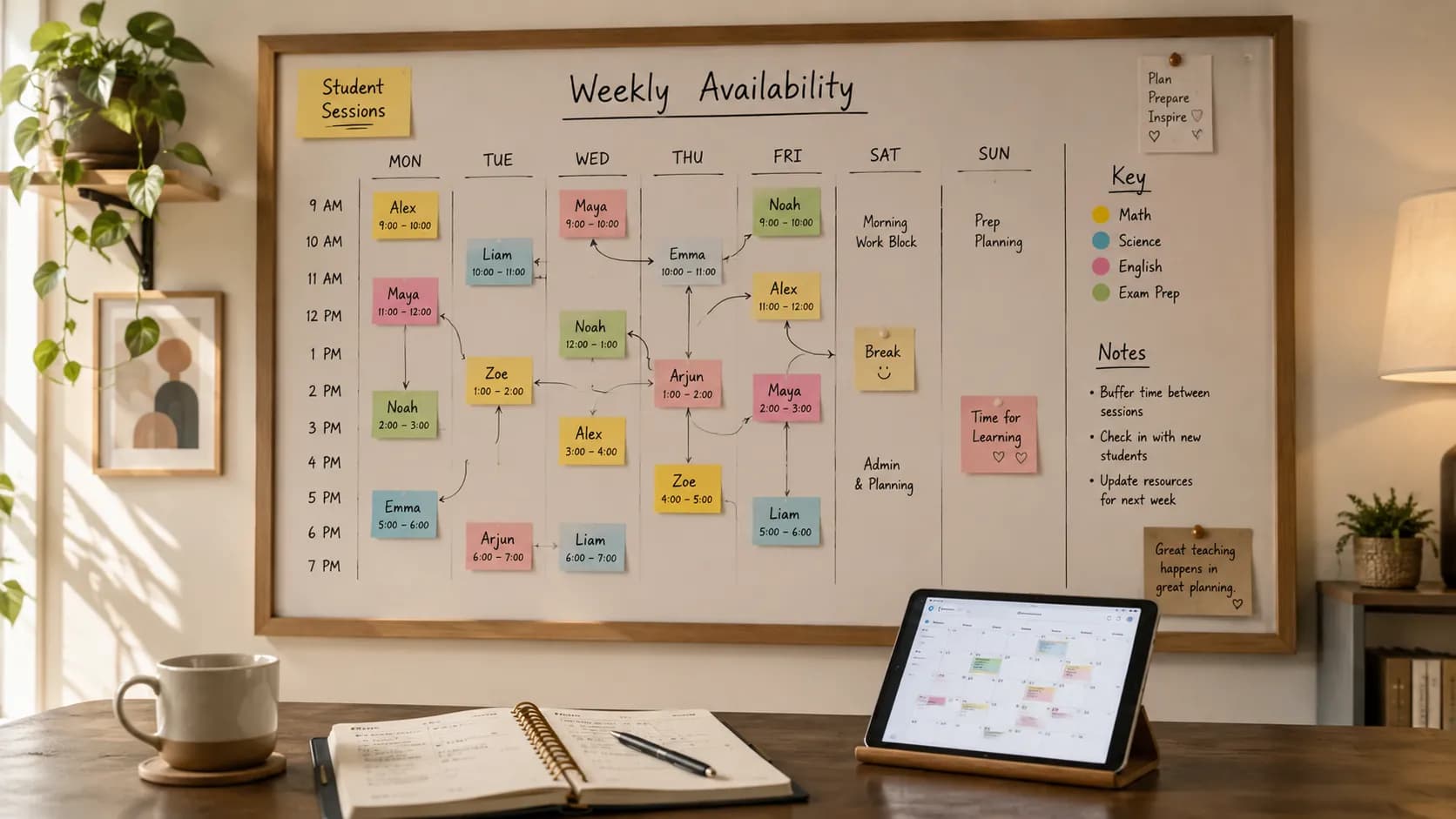
| Regular availability | The slot you propose at the end has to be one they can actually keep |
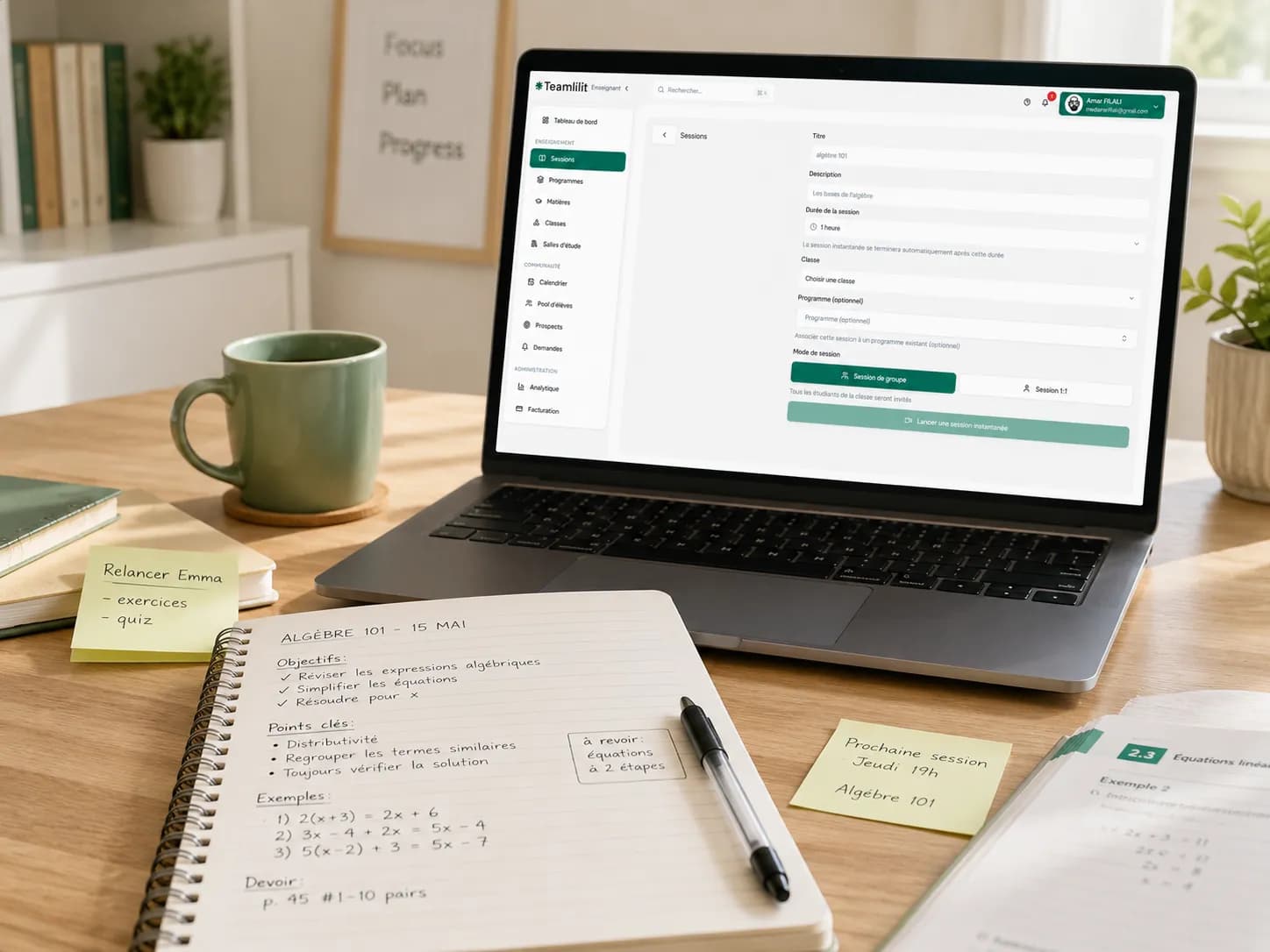
Keep those answers where the lesson notes will live rather than in your inbox, so the follow-up message writes itself later. Our free student profile template is a reasonable place to start if you do not have a system yet.
The 45-minute trial lesson, minute by minute
The structure below assumes forty-five minutes. For a thirty-minute trial, cut the guided practice block and keep the teaching to one worked example. The proportions matter more than the exact numbers: a short diagnostic, one taught idea, a chance to use it, and a real close.
Minutes 5 to 12: diagnose before you teach
The temptation in a trial is to perform. Resist it. Ask why they are looking for a tutor now, which topics went badly most recently, and what happens if nothing changes. Then ask one or two probe questions on the topic they named, and watch how they answer rather than whether they answer.
You are listening for the specific misconception, not a general level. "Struggles with algebra" is not something you can fix in front of them. "Expands brackets correctly but loses the sign on the second term" is.
Say what you found out loud before you move on: "So the method is there, it is the negatives that are costing you marks." Describing the problem accurately gives the student an immediate reason to trust you, and that trust is most of what they are deciding on.
Minutes 12 to 27: teach exactly one thing
Tutorful's guidance is blunt and correct: pick one of the areas your student made a mistake in and teach them that skill. One. A trial that sprints through five topics proves you are busy. A trial that closes one visible gap proves you are useful.
Work it live rather than describing it. Put the problem up, narrate the decision points, and make the reasoning visible instead of just the answer. Then stop teaching while the student still has energy left to try it themselves.

Minutes 27 to 37: make the student do it
Guided practice is where the trial is actually won, because this is the block where the win stops being yours and becomes the student's. Put up a problem that mirrors the one you just worked, the same skill with different numbers, and hand over the pen.
Reduce the support gradually. On the first question, prompt at each decision point: "What are you watching for on that second term?" On the next, stay quiet unless they stall, and answer questions with questions before you answer them with answers. The aim is that by the end of these ten minutes the student has worked one problem with almost no help, and knows it.
Keep their first attempt from the diagnostic visible while they work rather than wiping it. When the method they have just used correctly sits next to the mistake they made twenty minutes earlier, the progress does not need to be claimed out loud. It is on the board.
Minutes 37 to 45: feedback, then the close
Give one genuine strength and one gap, in that order, and keep both concrete. "You spotted the common factor faster than most Year 10s I work with" lands; "you did really well" does not.
Then close properly. The single most common way tutors lose a trial they have already won is ending on "let me know what you think", which hands a decision to someone who is comparing four tutors and will pick whoever is easiest to say yes to. Tutorful's tenth tip is to be confident and ask when they would like their next session and how often. Do that, out loud, before the call ends.
Put the before and after on the board
A trial has to leave physical evidence that something improved, or the student is left comparing vague impressions of four different tutors.
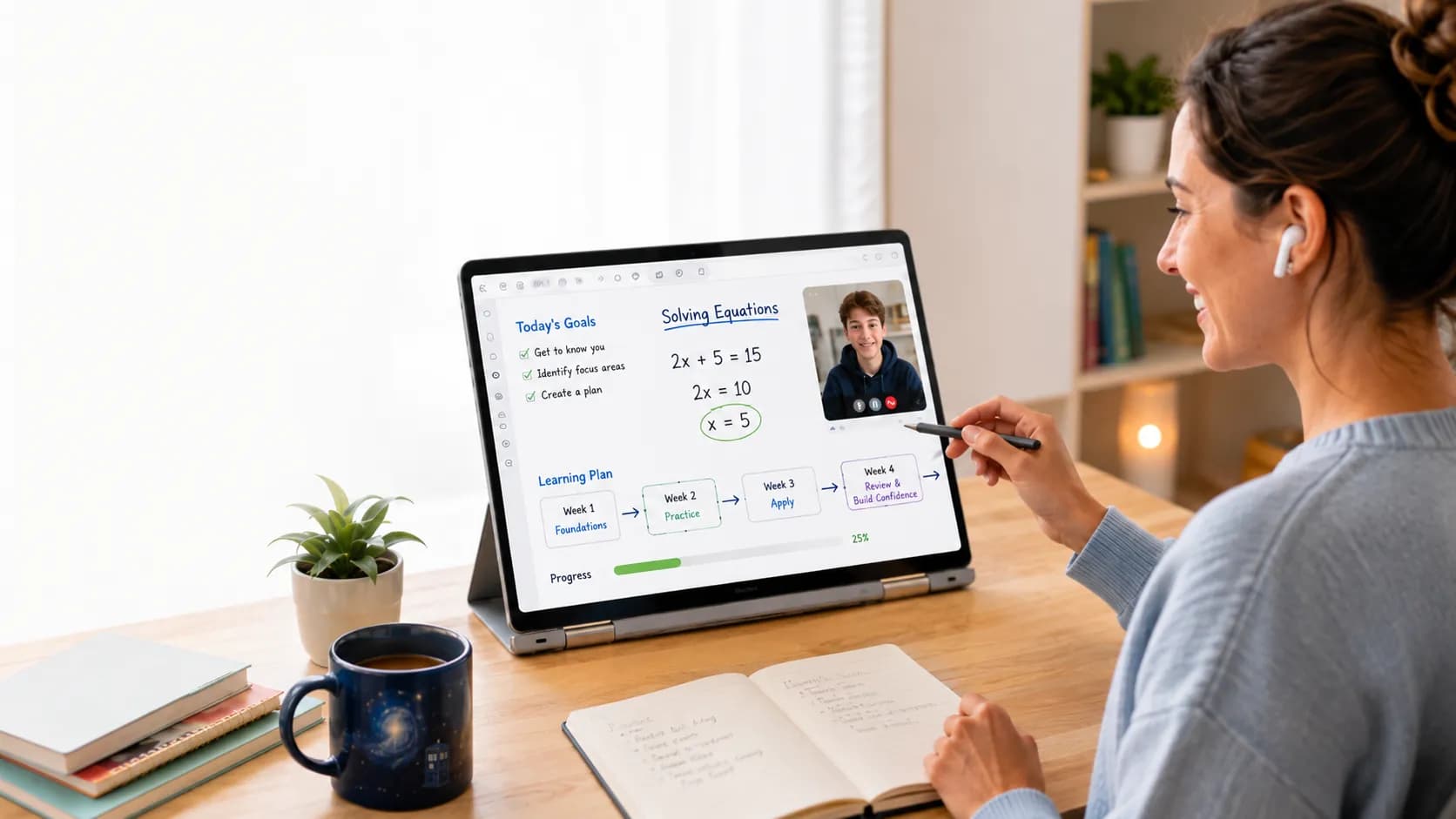
The simplest version: on your online whiteboard, keep the student's first attempt visible, then work the correct version beside it rather than wiping the board. At the end of the lesson they are looking at their own mistake and their own corrected method, side by side. That image does more selling than any credential in your profile.
In Teamlilit the board is saved with the session, so when the student comes back for lesson one you can reopen exactly where the trial ended, and the continuity itself reads as professionalism.
The closing script that books the next lesson
The close is three sentences: what you found, what you propose, which slot.
"Today showed me the method is solid and the marks are going on sign errors, which is very fixable. I would suggest weekly sessions, and I would spend the first four on negatives and rearranging so that the accuracy is fixed before we touch the harder topics. I have Tuesdays at five o'clock free from next week. Shall I hold that for you as a regular slot?"
Then stop talking. The question is closed, it names a real time, and it asks for one small yes rather than an open-ended commitment.
If the answer is "we need to think about it", do not retreat into "no problem, let me know". Say that you will hold Tuesday until Friday and send the plan in writing tonight, which gives them a deadline that is not aggressive and gives you a reason to follow up.
The follow-up you send within 24 hours
The parent who did not decide in the room decides when they read your message. Write it the same evening, while the specifics are still in your head, and keep it to one screen.

| Section | What goes in it |
|---|---|
| What I assessed | The topics you probed and how you probed them |
| What went well | One genuine strength, named specifically |
| What we need to work on | The single gap you identified, in plain language |
| The plan | What the first three or four lessons cover, and roughly when they should see a change |
| The next step | The exact slot you are holding, and until when |
Here is that structure as a message you can fill in tonight:
Hi [name], thanks for your time today. Here is where we got to.
What I assessed: [topic] and [topic], with a few questions to see how [student] approached them.
What went well: [specific strength, named precisely rather than "worked hard"].
What we need to work on: [the single gap you found, in plain language].
The plan: I would suggest weekly sessions. The first [three or four] would cover [skill], [skill] and [skill], and I would expect that to show up in [the next assessment or test date].
The next step: I am holding [day] at [time] until [deadline]. Let me know and I will confirm it as a standing slot.
Everything in that message should already exist in your notes from the lesson itself, which is the argument for writing them during the session rather than reconstructing them two days later. Our guide on how to keep lesson notes for tutoring students covers a format that survives contact with a busy week.
Five ways tutors lose a trial they should have won
- Assessing for the whole hour. A diagnostic with no teaching in it feels like an interview. The student leaves knowing you understand the problem and with no evidence you can fix it.
- Teaching four topics. Coverage is not competence. One closed gap beats four sampled ones every time.
- Hiding the price until afterwards. A number that appears after the lesson feels like a bill. The same number quoted beforehand feels like a rate.
- Ending on "let me know". This is the big one. If you do not propose a time, you are asking a busy parent to do the work of hiring you.
- Following up three days later. The message that arrives on Friday is competing with three other tutors and a weekend. The one that arrives the same evening is still part of the lesson.
What to test if your trial conversion is stuck
If you already run trials and they are not turning into students, change one variable at a time and treat ten trials as a practical minimum before drawing conclusions, or you risk reacting to noise.
| Test | Option A | Option B | What to count |
|---|---|---|---|
| Trial format | Free fifteen-minute consultation | Paid diagnostic, credited against the first block | Students gained per hour you spend on trials, not raw conversion rate |
| The close | "Shall I hold Tuesday at five for you?" | "Let me know if you would like to continue" | Share of trials that book before the call ends |
| Follow-up | Written plan the same evening | Verbal ask only | Share of undecided trials that book within forty-eight hours |
| Length | Thirty minutes | Forty-five minutes | Conversion rate and total hours spent per new student |
The second row is worth running first. It costs nothing, takes one sentence to change, and it targets the stage where trials are most often quietly lost.
Your trial lesson is also the last free thing a good enquiry gets from you, so it should be the most systematic hour in your week. Everything after it, the standing slot, the notes, the invoices, runs off the plan you agreed in those final three minutes. If the enquiries themselves are the constraint rather than the conversion, our guide on how to get more tutoring students is the better place to start, and tutors in technical niches should read the diagnostic-first approach in marketing a specialised tutoring business.
FAQ
Should a tutoring trial lesson be free or paid?
Both work, but they attract different people. A free session is easiest to say yes to and is best kept short, ten or fifteen minutes, so it stays a consultation rather than a free lesson. A paid diagnostic, often at a reduced rate and credited against the first block of lessons, filters for students who intend to commit and pays you for the hour you are holding open. Whichever you choose, state the price before the session, not after it.
How long should a tutoring trial lesson be?
Forty-five minutes is a practical default: it is enough for a full diagnostic, one taught concept, guided practice and a proper close. A thirty-minute trial works if you cut the guided practice and keep the teaching to a single worked example. A free trial should be much shorter, around fifteen minutes, because its job is to qualify the enquiry rather than to teach.
How much should I actually teach in a trial lesson?
One thing, taught properly. Pick a single skill the student got wrong during the diagnostic, teach it, then have them use it on a similar problem while you coach. A trial that races through five topics proves you are busy; a trial that fixes one visible gap proves you are useful, and that is what the student is deciding about.
What should I send after a trial lesson?
A short message within twenty-four hours with five parts: what you assessed, what the student did well, the main gap you found, what the first few lessons will cover, and the specific slot you are holding. Write it while the detail is fresh and keep it to a screen. The follow-up is not a thank-you note, it is the written version of the plan you proposed at the end of the lesson.
Ready to stop losing trials in the last three minutes? Start a free 14-day trial, set your availability, and book the next student into a standing slot. No credit card required.
Sources
- First Tuition Session: Top Ten Tips - Tutorful. Advises asking the right questions before the lesson, teaching one skill the student got wrong, and confidently asking when the next session should be.
- Your First Tutoring Session: 8 Top Tips for Success - PMT Education. Recommends agreeing what to cover in advance, sharing learning outcomes at the start, using concept-checking questions, and ending by summarising and agreeing what comes next.