In early July 2026, a tutor on Reddit's r/tutors advertised IB Economics tuition and led with a single credential: a student's recent top score in HL Economics. It worked as marketing because it answers the only question families really ask, which is "can you get my child a 7?". A few days later, a Cambridge examiner was doing the same for IGCSE and A Level English. Exam season is when specialist tutors sell on proof.
But a top score only opens the door. What keeps it open is a system: a way of structuring sessions that reliably produces exam technique, and a way of running the business side so that a full roster of IB students does not bury you in scheduling messages, notes, and invoices. This guide covers both, the IB Economics teaching structure and the operational workflows that make it sustainable.
How to structure IB Economics sessions for maximum impact
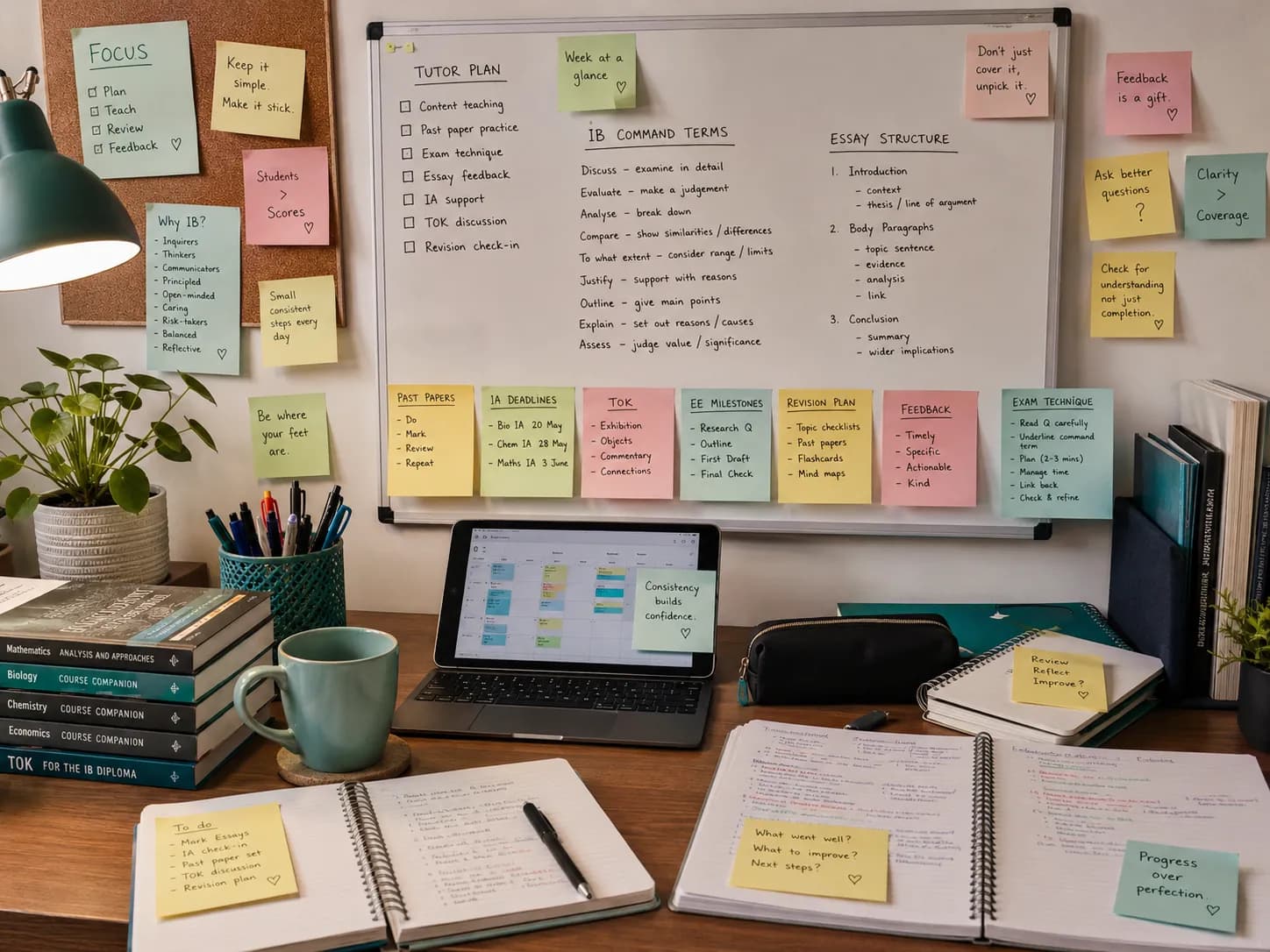
IB Economics rewards two different skills, and most students are weak in only one of them. Content mastery covers the diagrams, definitions, and theories. Exam technique covers writing to the rubric under time pressure: structuring a Paper 1 essay, working through Paper 2 data response questions, and, for HL students, handling the policy paper. A student can know every diagram in the syllabus and still lose marks by writing descriptive answers where the examiner wants evaluation.
The practical fix as an IB Economics tutor is to run two distinct session types instead of one generic lesson:
- Paper practice sessions. Timed questions under exam conditions, then marking together against the rubric. The student sees exactly where marks leak: a missing real-world example, an unlabelled diagram, an evaluation paragraph that never weighs both sides.
- Concept review sessions. Slower, deeper work on the theory itself: rebuilding diagrams from scratch, connecting concepts to current real-world events, and untangling the misconceptions the paper practice exposed.
Keeping the two strands separate does something subtle: it stops every lesson from collapsing into "let's go over what you got wrong", which feels productive but rarely moves technique. It also makes your materials reusable. A bank of timed questions by topic and a set of concept walkthroughs serve every student you teach, as long as each student's copies, marks, and notes stay filed on their own record rather than in one undifferentiated folder. If you also prepare students for other exam systems, the same discipline is at the heart of our guide to systemising IELTS and Cambridge exam prep.
How tutors schedule recurring lessons without rebooking every week
Exam results are rarely destroyed by one bad lesson. They are destroyed by inconsistency: skipped weeks, ad-hoc rescheduling, and the long silence between a mock and the feedback on it. For an IB student six months from exams, a protected weekly rhythm is worth more than any single brilliant session.
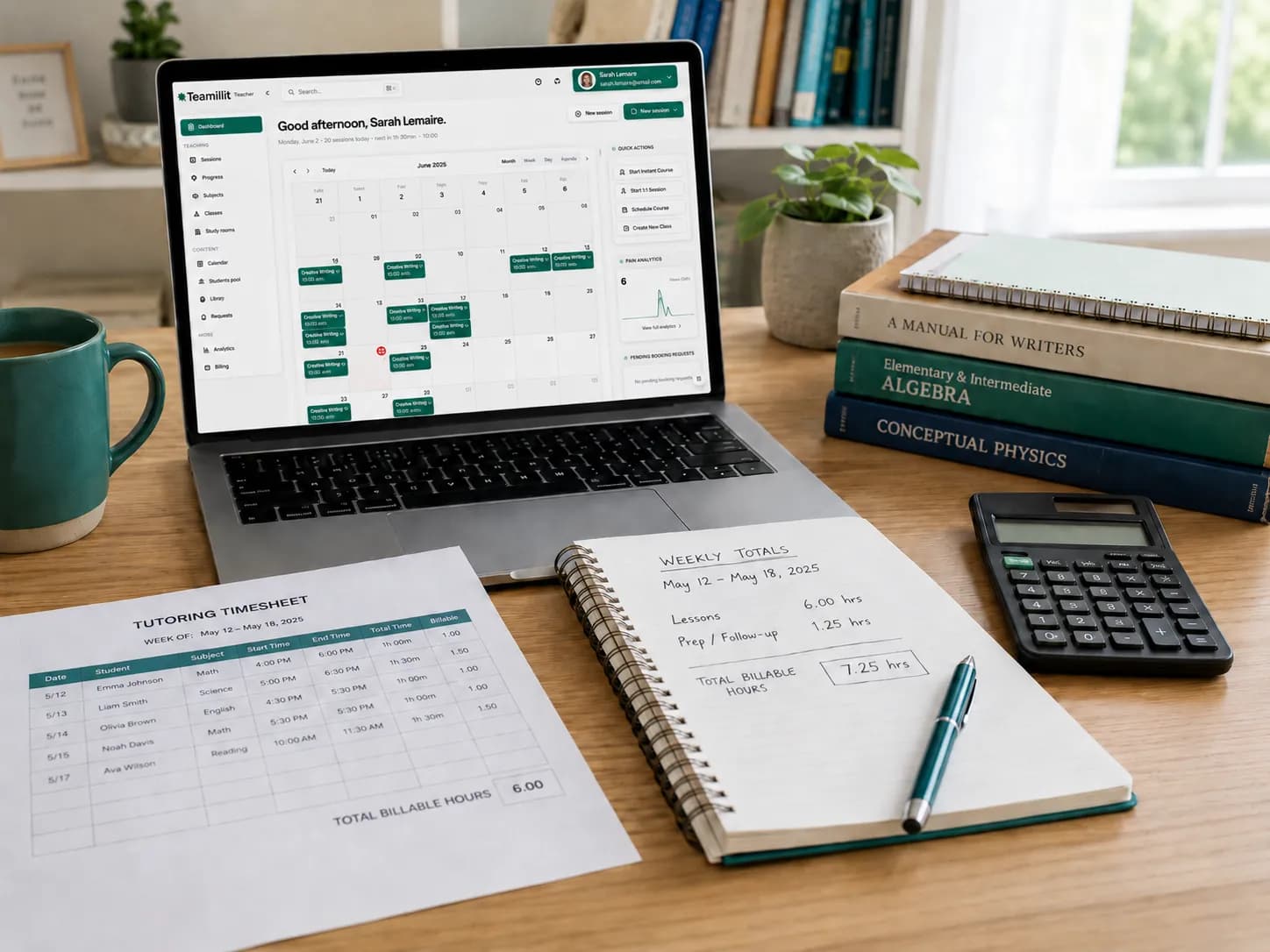
This is where recurring scheduling earns its place. Instead of negotiating a time every week over chat, set the slot once, for example every Thursday at 5 pm for Paper 1 essay practice, and let it repeat. In Teamlilit, a recurring lesson blocks the time on your timetable, sends automatic reminders before each session, and records attendance when the lesson runs, so the routine holds itself together without you re-booking manually. If your students book their own slots, the same logic applies: publish your real availability and let them book tutoring lessons online inside the windows you control, rather than wherever the conversation lands.
Two small habits multiply the effect. First, attach a purpose to each recurring slot, so "Thursday" means "Paper 1 practice" and neither of you spends the first ten minutes deciding what to do. Second, plan the term backwards from the exam date: diagnostic first, then a steady practice cadence, at least one full mock cycle, and a buffer week for review. A free tutor timetable template is enough to sketch that arc before you commit it to your calendar.
Four workflows that turn good teaching into a repeatable service
Structure and rhythm cover the teaching. These four workflows cover everything around it, and each one solves a pain point that specialist tutors hit as their roster grows.
1. Turn session feedback into a parent-ready summary
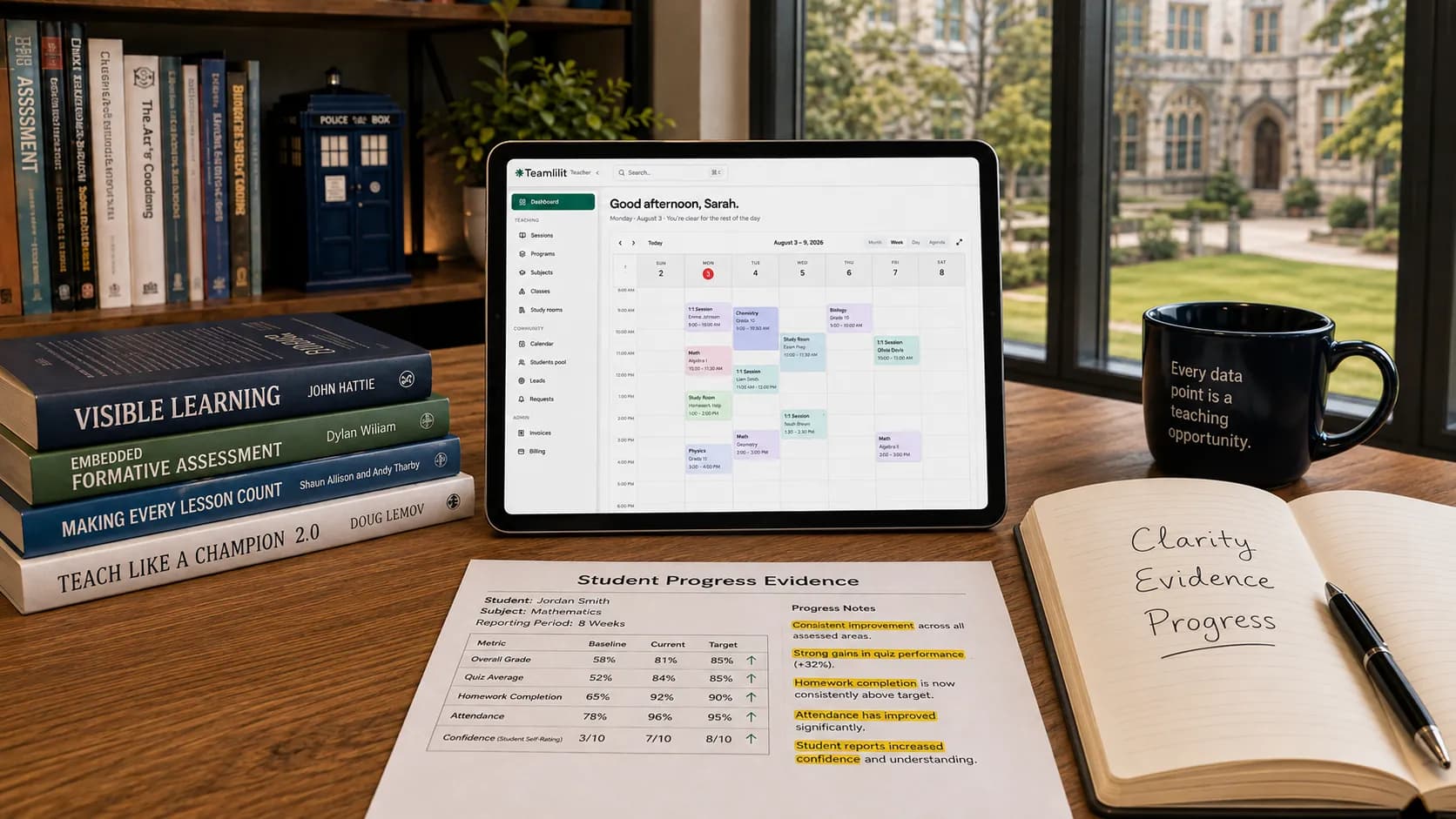
After a paper review session, the highest-value ten minutes is the summary: what the student did well, where marks leaked, and what happens before next week. Writing that from scratch for every student every week is how evenings disappear. A faster loop: jot the key points during the session, then use AI-assisted tools to draft a concise "strengths and next steps" summary from your notes, review and edit the draft so it stays accurate and in your voice, and send it while the lesson is still fresh. In Teamlilit, AI-assisted wrap-ups draft the summary and can suggest practice exercises, with you approving everything before it reaches the student or the family.
2. Package summer prep as a defined block
Summer sessions are the natural moment to create a discounted introductory package for your tutoring business: deadline-driven IB students want a defined outcome, not open-ended hours. A "Summer IB Econ Prep" block works when five things are explicit: who it is for, how many sessions it includes, what it focuses on, when it runs, and how progress gets reviewed. Price the block from your validated hourly rate, apply a modest early-booking discount, then set it up as a package on the student's record and send a single invoice for the whole package, so the family commits in one step instead of paying lesson by lesson. Scarcity is honest here: you genuinely have a limited number of summer slots, so say so in your marketing.
3. Build each student a personal revision library
Some concepts deserve a rewatch, not a re-explanation. When you deconstruct a tricky 15-mark question in a live lesson, record the walkthrough: Teamlilit's integrated classroom includes a whiteboard, screen sharing, and session recording, and the recording stays with the session so the student can revisit exactly how the argument was built. Over a term, those recordings and notes accumulate into a personal revision library that generic study guides cannot match. If a student prefers audio-visual revision, you can go one step further and turn study notes into engaging revision videos with NotebookLM.
4. Let attendance drive the billing
Specialist tutoring involves irregular patterns: an extra mock-week session here, a rescheduled lesson there. Reconstructing that from memory at the end of the month is where billing disputes are born. The cleaner pattern is attendance-based invoicing: every session that runs produces an attendance record, and invoices are generated from those records for you to review before sending. Our guide on how to invoice tutoring students covers the mechanics, including consolidated invoices for families with more than one learner. And if part of your teaching still happens off-platform, a free tutoring attendance sheet template keeps those records consistent too.
Don't let your expertise get buried in admin
Here is the trap for every specialist tutor: the better your results, the more students arrive, and the more your week fills with the work around the teaching rather than the teaching. The manual version is familiar, a calendar app for slots, a chat thread per family, a spreadsheet for payments, a folder of documents per student, and you as the only link between them.
The alternative is one connected system: recurring scheduling for consistency, packages for promotions, student records for organisation, and attendance-based invoicing for accuracy. That is the case for running your practice on tutoring management software rather than a patchwork of apps, with every lesson, note, and invoice attached to the student's record instead of scattered. The live teaching side matters too: an integrated online classroom means no meeting links to send and attendance tracked from the lesson itself, and our tips for engaging virtual classrooms show how to keep the screen-side experience sharp.
None of this replaces your subject expertise. It protects it. Every hour the system absorbs is an hour returned to marking essays properly, building better questions, or simply not working at 11 pm.
Systemise your expertise
A top score gets you attention. A system turns that attention into a stable, professional tutoring practice: two session types that reliably build technique, a recurring weekly rhythm that survives busy terms, summaries that keep families confident, defined packages that sell outcomes, and billing that runs from attendance instead of memory.
Do not implement all of it this week. Pick the piece that hurts most, usually the scheduling or the summaries, and systemise that one first. The rest can follow one workflow at a time.
FAQ
How do I transition a student from a trial lesson to a regular weekly schedule?
Agree the goal and the weekly slot before the trial ends, then set the session to repeat so the time is protected without rebooking. A recurring lesson with automatic reminders and attendance records removes the weekly back-and-forth, and keeping your trial notes on the student's record means the second lesson starts from evidence instead of a blank page.
What is the most effective way to structure IB Economics tutoring sessions as exams approach?
Split your teaching into two repeating session types: timed past-paper practice marked against the rubric, and concept review that rebuilds diagrams and links them to real-world examples. Keep the materials for each strand organised per student, so every session starts where the last one ended.
How can I create a summer prep offer that students actually want to buy?
Make it a defined block rather than open-ended hours: a fixed number of sessions, a clear focus such as Paper 1 essay technique, a start and end date, and a review point. Price it from your validated hourly rate, offer a modest early-booking discount, and invoice the block up front so committing takes one step.