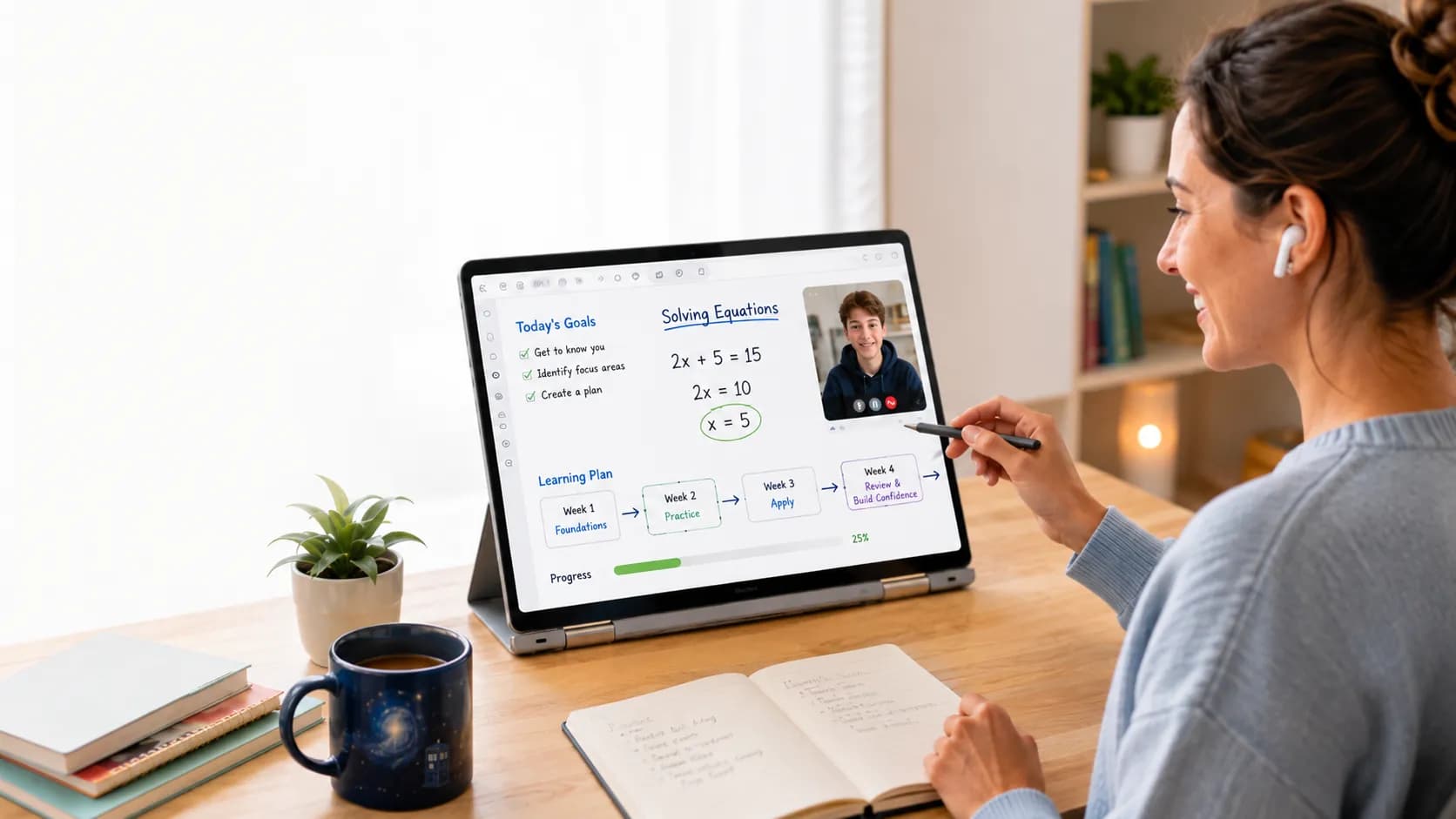
Coming back to tutoring after a few months away can feel worse than starting from scratch. You know you can teach. You may even have old students who loved your lessons. But the enquiries are quiet, your marketplace profile feels stale, and the admin setup you once held together with WhatsApp, Google Calendar, and a spreadsheet suddenly looks fragile.
In the UK, that silence does not mean demand has vanished. The Sutton Trust's Private Tutoring 2026 polling found that 29% of secondary pupils in England and Wales have had private tutoring at some point, rising to 45% in London. And with A level results on Thursday 13 August and GCSE results on Thursday 20 August 2026, mid-July is exactly the window to get visible and bookable again, before results, resits, and the September rush send parents searching in earnest.
Why the phones stay silent after a tutoring break
The first mistake returning tutors make is assuming the market moved on. More often, the problem is discoverability. On UK marketplaces, search position and conversion are tied to practical signals: Tutorful's own guidance says tutors who respond within an hour are far more likely to secure a booking, that reply speed affects search position, and that inaccurate availability actively hurts your ranking. Profile freshness matters most around key academic moments, which is precisely when a returning tutor's profile looks coldest.
So when you paused teaching, you did not just pause lessons. You paused the trust signals that help parents choose quickly: recent reviews, fast replies, live availability. Tutor communities on Reddit echo the same pattern in different words, with returning tutors asking why the enquiries stopped and the useful answers circling back to fresher proof, faster replies, and an easier path to booking. Your relaunch should not start with paid ads. It should start with becoming easy to trust and easy to book again.
Quick audit: are you still bookable tonight?
Before you market anything, check whether a parent who finds you right now can actually act. If you have a Google Business Profile, are the hours current and does any appointment link still work? If you use a calendar booking page, is it live, accurate, and pointing at slots you would actually honour? A relaunch dies quietly when the first warm enquiry lands on a dead link or an outdated calendar.
Then audit the basics parents use to make a yes-or-no decision: subjects, year groups, exam boards, lesson format, price, cancellation policy, and where lessons happen. Small gaps read as neglect. If the booking flow itself is the weak point, fix that first: our guides on letting students book tutoring lessons online and creating a tutoring timetable cover the mechanics.
This is also where a connected setup starts paying for itself. Teamlilit gives tutors a public booking page with student self-booking, automatic reminders, and Google Calendar sync, so the availability parents see stays aligned with the calendar you actually live by. Accurate slots and reminders quietly remove the no-shows and back-and-forth that make a comeback harder than it needs to be.
Five relaunch plays that bring back students fast
1. The reactivation sweep
Your cheapest students are the ones who already know you. Go back through last year's lesson notes and session history and write personal comeback messages, not a broadcast. "I'm teaching again" is easy to ignore. "I'm opening a few new maths slots for Year 10 and thought of Maya, because we had made real progress on algebra and exam confidence" lands differently. This is where stored notes earn their keep: if your records live in one place, each message takes two minutes, and a free lesson notes template gives you that structure going forward. AI-assisted drafting can speed up the writing, as long as you review every message so it still sounds like you.
2. Fresh proof beats a stale biography
If your last review is a year old, create a reason for new ones. Run a short free workshop on one narrow, current UK need: a GCSE algebra reset, an 11+ verbal reasoning warm-up, back-to-school study skills for Year 9. You are not giving your business away; you are generating current parent conversations, recent outcomes, and new testimonials, the exact signals marketplaces and word-of-mouth run on.
3. The marketplace reboot
Do not just reactivate your old listing. Rework it: narrow the headline to a specific problem, refresh the photo, rewrite the first paragraph around outcomes, and set availability you will actually honour, since accurate slots are a ranking input, not decoration. Pair the reboot with a limited relaunch offer that protects your value, such as a discounted three-session starter bundle, rather than cutting your hourly rate across the board.
4. The local word-of-mouth restart
Independent UK tutors still win through trusted introductions: parent WhatsApp circles, school-adjacent groups, libraries, community organisations. Make each introduction effortless by giving people one link to share instead of "tell them to message me". A booking page turns a warm recommendation into an immediate action while the parent is still motivated, which is the practical case for tutoring scheduling software over a patchwork of DMs, and for running the whole operation on a tutor management platform as the roster refills.
5. The referral ladder
Once a family sees progress again, ask for the introduction while the win is fresh, and make the ask specific: a sibling, a friend in the same year group, another parent facing the same exam. Then reward it cleanly. In Teamlilit you can issue a credit note or apply account credit against a family's next invoice as a thank-you, but the ask itself stays human: you decide when a referral has earned it, the software just keeps the accounting tidy. Our guide to getting tutoring referrals and reviews has scripts for the ask itself.
Turn first bookings into a full calendar
The crucial comeback mistake is treating every new booking as a one-off. Your job in the first conversation is to convert urgency into rhythm: offer a recurring weekly slot while the need is still hot. Recurring sessions are more stable than ad hoc bookings, reminders keep them running, and self-service rescheduling means a conflict moves the lesson instead of cancelling it. If you are still sketching your ideal week, start from the free tutor timetable template.
Prepaid blocks help too. A 10-hour or 12-session pack tied to a clear goal beats pay-as-you-go chaos: cash flow steadies, and the renewal conversation starts naturally when the balance runs low. In Teamlilit, attended sessions draw down the package balance and package-covered lessons are not billed twice, so a block never turns into an invoicing dispute.
Just as important, make progress visible fast, because parents renew what they can see working. A short summary after each session, a next step, and a steady update rhythm do more for retention than any discount. Teamlilit's AI session wrap-ups draft the summary, notes, and suggested exercises, and you review and edit before anything goes out: faster communication, not fake automation.
Admin that scales with your comeback
A comeback usually breaks the old WhatsApp-and-spreadsheet setup, because you are marketing, teaching, scheduling, and invoicing all at once. There is also the unglamorous UK compliance layer: HMRC expects self-employed tutors to keep records of business income and expenses, generally for at least five years after the relevant 31 January deadline. Clean records are not optional once the roster grows again.
Connected invoicing is the piece that saves the most evenings: tracked lesson attendance becomes invoice drafts you review and send, one run can bill a class, a tag, or a selected group of students, and credit notes and account statements keep the edge cases tidy. Our guide on how to invoice tutoring students covers the fundamentals if you are rebuilding this from scratch.
A 30-minute weekly marketing rhythm
The tutors who rebuild fastest are rarely the loudest. They are the most consistent. A sustainable rhythm: on Monday, one useful explainer aimed at a specific parent worry; on Wednesday, one small proof point, such as a misunderstanding you fixed or a study habit win; on Friday, a short availability or progress update. One genuinely useful piece that ends in a booking path beats a week of filler, and our marketing playbook for tutors ranks the channels if you want to go deeper.
When to raise rates again
Do not raise rates because you feel underpaid after a quiet patch. Raise them when your diary behaves like a system again: the same days nearly full, recurring lessons sticking, enquiries arriving without panic. Stronger profiles and fresh reviews buy pricing flexibility, so let the trust rebuild come first. When you do move, frame it around structure and outcomes, and set the new number from evidence with our guide on how to price online tutoring sessions.
Want to see the whole relaunch flow working together, from booking page to attendance-linked invoice? See how the software behind a tutoring business fits together, or start the free 14-day trial and rebuild the system before the August results rush.
FAQ
How long does it take to rebuild a tutoring client base after a break?
It varies by subject, location, exam season, and how warm your old network still is. What matters most is consistency rather than ad spend: weekly outreach, a current profile, fresh proof, and a booking path with minimal friction. UK demand is still there; the usual bottleneck is whether parents can find you and act immediately.
Should I discount my tutoring sessions when restarting?
A short, clearly limited relaunch bundle is usually safer than permanently cutting your hourly rate. Stronger profiles and fresh reviews create more pricing flexibility, so rebuild trust first and protect your long-term pricing.
What if my tutoring niche now has more competitors?
Narrow the promise instead of racing to the bottom. Parents compare tutors on clarity, fit, outcomes, reviews, and responsiveness, not only on price. A profile that speaks to one specific need, such as GCSE resit maths or Year 6 English confidence, usually beats a generic all-subjects listing.
Can software really help me get students again?
Not by replacing marketing. It helps by removing the admin friction that kills conversion and referrals: stale availability, no booking path, forgotten reminders, scattered lesson notes, and slow invoicing. A public booking page, reminders, progress summaries, and cleaner billing make it easier for a recommendation to become a paying student and stay one.
Sources
- Private Tutoring 2026 - The Sutton Trust. 29% of secondary pupils in England and Wales have ever had private tutoring; 45% in London.
- Results days - AQA. A level results Thursday 13 August 2026; GCSE results Thursday 20 August 2026.
- How do I get my profile to the top of the search results? - Tutorful. Reply speed, accurate availability, and profile freshness influence marketplace ranking and bookings.
- Business records if you're self-employed - GOV.UK. HMRC record-keeping requirements for self-employed income and expenses.