In early July 2026, a tutor on Reddit advertised one-to-one online tuition for KG to Class 8 students across O Level, APS, Bahria College and homeschool backgrounds. One tutor, four curricular worlds, often in the same afternoon. That single post captures a real shift in private tutoring: the average tutor is no longer serving one neat curriculum lane. They are juggling students who use different textbooks, move at different speeds, and need different levels of parent communication.
If you want to personalise tutoring for diverse student backgrounds without doubling your prep time, the answer is not writing five separate lesson plans every day. The answer is one repeatable workflow: collect the right intake data, map overlapping outcomes, diagnose gaps fast, reuse a structured lesson-notes system, and turn session notes into clear updates for families. That approach matches what the evidence says about differentiated learning, diagnostic assessment, feedback and parental engagement: meet learners where they are, check understanding early, and communicate next steps clearly.
Why mixed-curriculum tutoring feels harder than it looks
The labels hide real differences. Cambridge O Level is a broad, subject-based programme with more than 40 subjects and a strong emphasis on enquiry and problem solving. APSACS operates as a standardised school system with centrally planned syllabi and prescribed book lists. Bahria College runs its own structures across early years, primary, middle and secondary. Homeschooling adds another layer, because families often combine resources rather than following one fixed package.
In practice, "Class 6 maths" can mean four very different starting points. Two students in the same grade can be working from different books, at different depths, towards different test formats. Treating them as interchangeable is where mixed-roster tutoring starts to hurt.
That is also why teaching to the middle is such a trap. Aim one generic lesson at the average learner and the stronger student gets bored, the shaky student gets lost, and the homeschooler may not even be practising the right content. UNESCO's recent work on differentiated learning makes the basic point plainly: instruction, assessment and classroom routines need to meet every learner where they are, adapting to different needs, interests and backgrounds.
The good news is that you do not need separate businesses inside your business. You need a system that creates micro-paths inside one tutoring workflow. Here is a five-step version you can start using this week.
Step 1: Collect the right intake data on day one
Do not stop at grade level and subject. Ask for the curriculum or school system, current textbooks, language of instruction, recent topics covered, confidence level, upcoming test format, parent update preference, and any known learning gaps. O Level, APS, Bahria and homeschool learners are not arriving from the same curricular base, and a structured intake record prevents the classic mistake of discovering the real syllabus halfway through the month.
Then make the record searchable. Create a profile for each learner and tag it by curriculum: APS, O Level, homeschool, Bahria. Add one more layer for grade band or weak-skill area if you need it. The point is speed later: when a student struggles with fractions, essay structure or tense control, you want to filter your roster instantly instead of scrolling through WhatsApp threads, notebooks and old spreadsheets. If your student records still live in five places, our guide to organising private tutoring students covers the record-keeping side in depth.
Step 2: Map curriculum outcomes into one lesson spine
The fastest planning method for mixed-curriculum tutoring is a matrix, not a separate plan for every learner. Put your learning objectives down the left side, list curricula across the top, and fill in how each learner practises the same objective. Once that spine exists, every student follows the same core objective with different texts, examples, scaffolds or challenge tasks.
| Learning objective | O Level | APS | Homeschool |
|---|---|---|---|
| Solve one-step fraction problems | Past-paper style word problems | Exercise set from the prescribed textbook | Practical examples from the family's chosen programme |
| Identify the main idea of a passage | Unseen comprehension extract | Passage from the current English unit | Chapter from the novel the family is reading |
| Write a paragraph with evidence | Timed exam-style response | Guided paragraph frame | Free topic with a self-check list |
That is differentiated instruction in a form you can actually run as a working tutor: one plan, many paths. Add a column when a new curriculum joins your roster instead of adding a new planning evening.
A reusable notes format is the secret weapon here, because a fixed structure forces you to plan once and adapt quickly. Our free tutoring lesson notes template already separates lesson details, what happened, misconceptions, confidence, homework, next lesson focus and parent action, so one session record can become a tutor note, a parent update, a next-lesson plan and a progress entry. If you want to build the habit properly, see how to keep lesson notes for tutoring students without it eating your evenings.
Step 3: Diagnose with bite-size formative checks
Before you teach new content, spend two minutes confirming what the student actually knows. A tiny entry quiz, three oral questions, a mini whiteboard task or one worked example is enough. The point is not to produce data for a dashboard. The point is to uncover misconceptions before you build new content on top of them.
The evidence here is blunt. The Education Endowment Foundation's work on diagnostic assessment stresses that taking account of prior knowledge is essential to meeting learning needs, and that diagnostic checks help teachers surface misconceptions and respond to them. Barak Rosenshine's Principles of Instruction reach a similar conclusion from classroom research: effective teachers begin lessons with short reviews and ask many questions to connect new material to previous learning.
Keep the checks small and repeatable. The best tutors do not write a new diagnostic from scratch every lesson; they keep a short bank of prompts by topic and vary the difficulty live. In an online lesson, quick whiteboard tasks and oral checks double as engagement tools, and our tips for engaging virtual classrooms show how to keep those checks interactive rather than interrogative.
The payoff is huge. Instead of assuming all three of your Tuesday students "covered fractions at school", you find out that one cannot reduce fractions, one can calculate but not explain, and one is ready for word problems. Same objective, different route. That is how you stop teaching to the middle without creating an impossible planning burden.
Step 4: Turn every session into a summary while it is fresh
A lot of tutors personalise the lesson and then lose the gain because the follow-up is vague, late or missing. Good feedback should be specific and linked to learning goals, not a fuzzy "did well today" message; that is the core recommendation of the EEF's guidance on teacher feedback. The session summary is the bridge between teaching, homework and parent communication, and it is worth systemising.
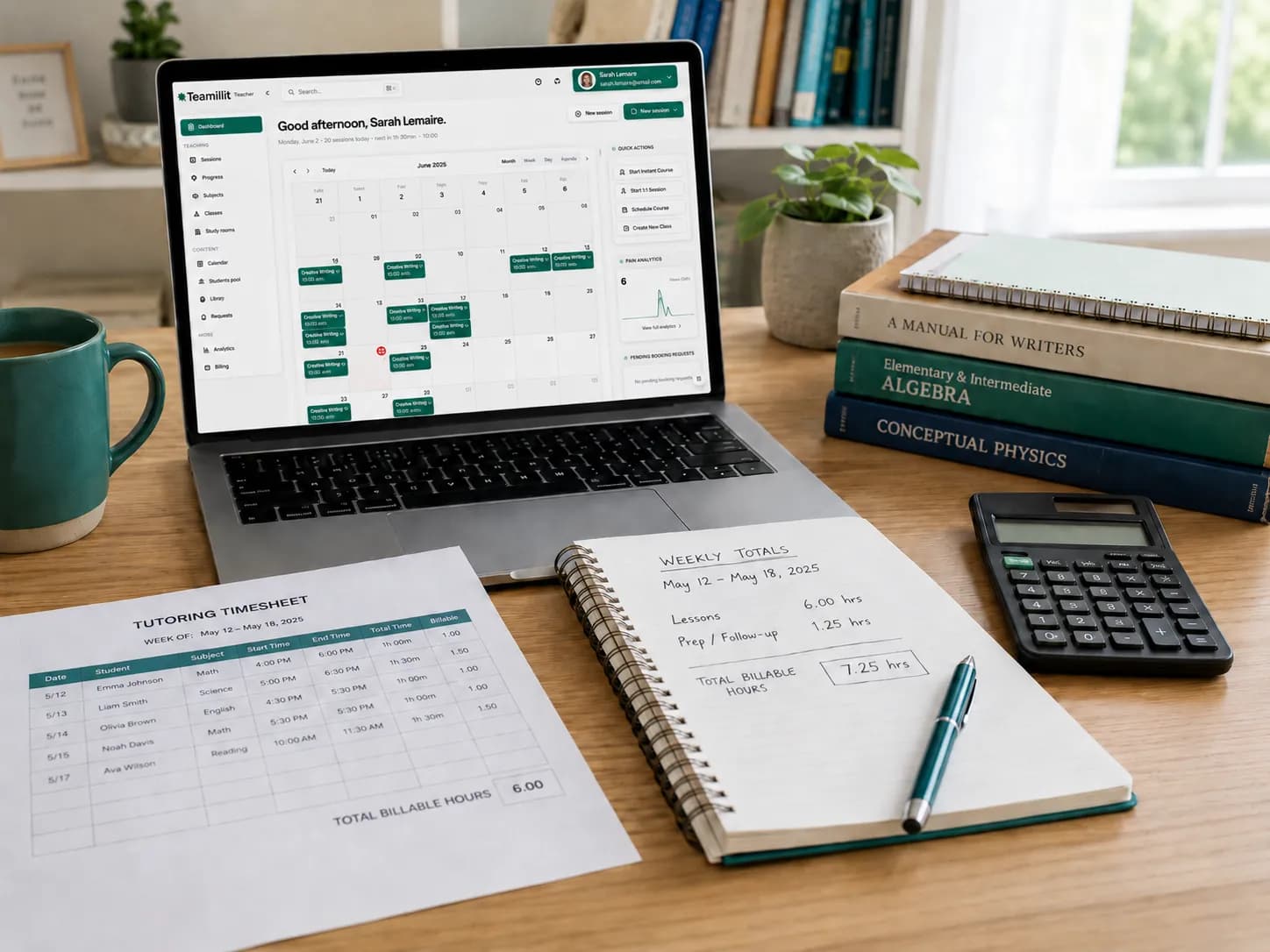
This is where AI earns its place in the workflow. In Teamlilit, your explanations are captured during the lesson, and afterwards an AI-assisted wrap-up drafts the summary, session notes and suggested exercises for you. You review and edit the draft before anything is saved or sent, so the record stays accurate and in your own voice. Notes and homework live on the session, are saved to each student's history, and are emailed automatically to the students who attended. AI wrap-ups are available on Pro and Academy plans.
You can keep the academic content the same while adjusting tone and detail: warm and practical for the parents of a KG learner, more direct and self-management focused for an older student.
One important limit: if your notes are handwritten on paper, type the key points into your lesson record before asking AI to polish them. The workflow is built around typed notes or a draft generated from the session itself, not magic interpretation of a random notebook page. The safe habit is simple: jot rough bullets during or just after the lesson, then turn them into a finished summary while the session is still fresh.
Step 5: Close the loop with parents and guardians
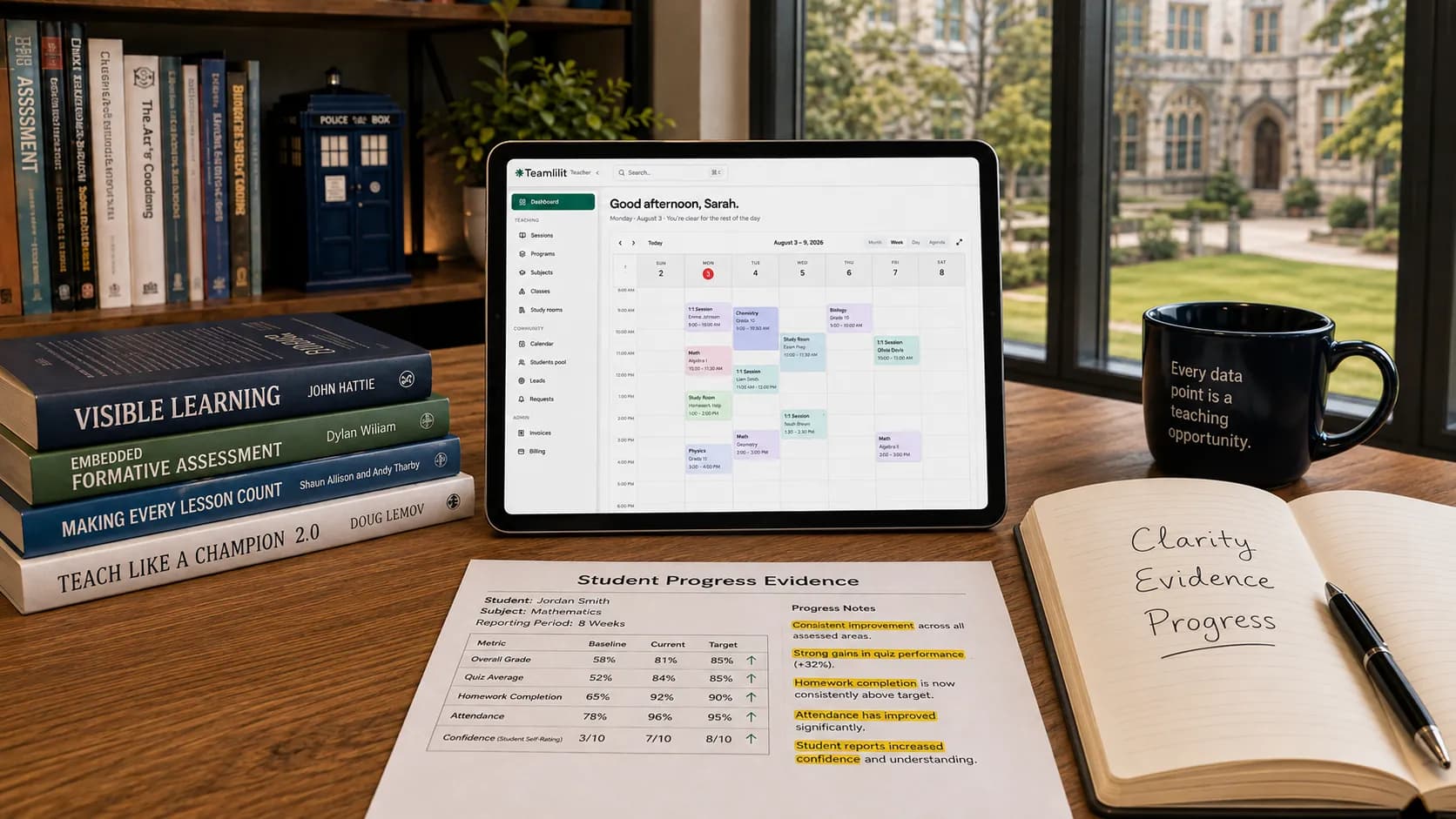
For younger learners especially, tutoring only feels organised if the family can see the pattern: what was taught, what improved, what still needs work, and what happens next. The EEF's guidance on working with parents consistently finds that communication works best when it is personalised, positive and linked to learning. It is not about sending long essays. It is about making progress visible and next steps clear.
A simple Friday workflow does the job. Open your records by curriculum tag, scan the week's lesson notes, and send short progress updates anchored in evidence rather than memory. One note might say "APS Class 5: struggled with borrowing in subtraction, now correct on three out of five practice questions." Another might say "O Level English: strong comprehension, still working on structuring evidence in short written responses." When your notes are structured, these updates stop being a separate task and become a copy-edit job. For scripts and cadences, our guide to communicating with parents as a private tutor goes deeper.
Why connected records beat a stack of apps
If you are comparing platforms this year, this is the question to ask: does the tool help you run this full cycle in one place? Plenty of tutors can already stitch together a video call, a whiteboard, a booking link and a spreadsheet. The real bottleneck is not "can I teach online?" It is "can I keep student records, lesson notes, attendance, follow-up and billing connected enough to personalise well at scale?" Our review of the best tools for online tutors keeps surfacing the same operational problem: separate apps are easy to start with, but records and invoices drift back into spreadsheets.
A tutor's real enemy is fragmentation. When booking, teaching, records, follow-up and billing live in separate tools, personalisation gets harder precisely when your roster becomes more diverse. When they stay connected, as in tutoring management software built for this workflow, personalisation becomes the default output of good records rather than a heroic extra effort: tags organise the roster, one notes structure feeds every follow-up, and attendance flows into billing without rebuilding invoices by hand.
Quick-start checklist
Use this as the no-fluff version of the article:
- Create curriculum tags for APS, O Level, Homeschool and Bahria, then add a second layer for grade band or weak-skill area.
- Build one intake form that captures curriculum, books used, language of instruction, recent topics, confidence and parent update preference.
- Save a single lesson notes template and use it for every student, so you can compare misconceptions and next steps consistently.
- Start each lesson with a two-minute diagnostic check before new teaching begins.
- After each session, generate or write the summary while the lesson is fresh, then adjust the tone for parent or student.
- On Friday, review notes by tag and send short progress updates linked to learning, not just attendance.
- Let new families book tutoring lessons online so intake starts from a clean record instead of a chat thread.
FAQ
How do I keep separate curricula from becoming separate lesson plans?
Use a curriculum matrix. List learning objectives down the side, curricula across the top, and mark what applies to each learner. Then teach one core objective with different scaffolds, examples, or extension tasks. That is differentiated instruction in a form a working tutor can actually run.
Can AI really understand my handwritten lesson notes?
Not reliably. AI summarisation works best from typed session notes or from a draft generated from the session itself. If your notes start on paper, type the key points into your lesson record first, then use AI to polish the summary and homework.
What if parents want daily updates instead of weekly ones?
Keep the same lesson-note structure and shorten the rhythm. Send a brief update after each session covering what was taught, what improved, and what to practise next. Daily communication should stay brief, specific, and linked to learning, which is what the parental engagement evidence recommends.
What should tutors look for in online teaching platforms in 2026?
Look past the video call. Choose a platform that keeps scheduling, student records, lesson notes, attendance, and billing connected in one place. The more diverse your student roster becomes, the more valuable that connected workflow is, because personalisation depends on organised records.
Sources
- Cambridge O Level - Cambridge International. A broad programme with more than 40 subjects available in any combination.
- Meeting Every Learner Where They Are - UNESCO. Differentiated learning pedagogies that adapt instruction to learners' needs, interests and backgrounds.
- Making effective use of diagnostic assessment - Education Endowment Foundation. Diagnostic assessment helps identify prior knowledge and uncover misconceptions.
- Principles of Instruction - Barak Rosenshine, American Educator. Effective teachers begin lessons with short reviews and ask many questions.
- Teacher Feedback to Improve Pupil Learning - Education Endowment Foundation. Feedback should be specific, timely and linked to learning goals.
- Working with Parents to Support Children's Learning - Education Endowment Foundation. Personalised, positive, learning-linked communication engages parents best.